












What is Application Security? A Complete Guide to Protecting Modern Applications
Learn what Application Security is, why it is important, common application vulnerabilities, security testing methods, best practices, and how organizations secure modern applications.


Introduction
Modern organizations rely heavily on web applications, mobile applications, APIs, and cloud-native software to deliver digital services. From online banking and healthcare portals to e-commerce platforms and SaaS products, applications have become the primary interface between businesses and their customers.
As applications continue to evolve, they have also become one of the most targeted attack surfaces for cybercriminals. Vulnerabilities such as SQL Injection, Cross-Site Scripting (XSS), Broken Authentication, and insecure APIs can allow attackers to steal sensitive data, disrupt services, or gain unauthorized access to critical systems.
This is where Application Security (AppSec) becomes essential.
Application Security is the practice of protecting software applications from security threats throughout their entire lifecycle-from design and development to testing, deployment, and maintenance.
Rather than addressing vulnerabilities after deployment, Application Security focuses on building secure applications from the beginning using secure coding practices, continuous testing, vulnerability management, and proactive monitoring.
In this guide, you'll learn what Application Security is, why it is important, common threats, security testing techniques, best practices, and how organizations protect modern applications against evolving cyber threats.
Table of Contents
- What is Application Security?
- Why Application Security is Important
- How Application Security Works
- Secure Software Development Lifecycle (SSDLC)
- Types of Application Security Testing
- OWASP Top 10
- Common Application Vulnerabilities
- Application Security Best Practices
- Benefits
- FAQs
What is Application Security?
Application Security, often referred to as AppSec, is the practice of protecting software applications from vulnerabilities, cyberattacks, and unauthorized access throughout the Software Development Life Cycle (SDLC).
It includes a combination of secure coding practices, automated security testing, vulnerability management, access control, encryption, and continuous monitoring.
Application Security is not limited to web applications.
It also covers:
- Web Applications
- Mobile Applications
- Desktop Applications
- APIs
- Cloud-native Applications
- SaaS Platforms
- Microservices
The primary objective of Application Security is to identify and eliminate security vulnerabilities before attackers can exploit them.
Why is Application Security Important?
Applications process enormous amounts of sensitive information every day, including customer records, payment information, healthcare data, business documents, and intellectual property.
If an application contains security weaknesses, attackers can exploit them to:
- Steal confidential information
- Gain unauthorized access
- Execute malicious code
- Disrupt business operations
- Deploy ransomware
- Compromise customer accounts
Application Security helps organizations:
- Protect sensitive data
- Reduce cyber risk
- Prevent data breaches
- Improve customer trust
- Meet regulatory compliance
- Secure cloud-native applications
- Reduce remediation costs
Modern organizations must integrate Application Security into every stage of software development rather than relying solely on security testing before release.
How Application Security Works
Application Security combines multiple security practices to protect applications throughout their lifecycle.
A modern AppSec program typically includes:
Secure Design
Security begins during the architecture and design phase by identifying potential risks and defining appropriate security controls.
Secure Coding
Developers follow secure coding standards to reduce common vulnerabilities such as injection attacks, insecure authentication, and improper input validation.
Security Testing
Applications undergo continuous security testing using automated and manual techniques before deployment.
Secure Deployment
Applications are deployed using secure configurations, protected infrastructure, and controlled access management.
Continuous Monitoring
After deployment, applications are continuously monitored to identify vulnerabilities, suspicious behavior, and emerging threats.
Secure Software Development Lifecycle (SSDLC)
Application Security is closely integrated with the Secure Software Development Lifecycle (SSDLC).
Each phase of development includes security activities.
Planning
Security requirements and compliance objectives are identified before development begins.
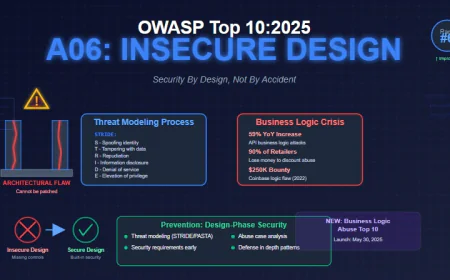
Design
Threat modeling helps identify potential attack scenarios before applications are built.
Development
Developers implement secure coding practices while automated security tools continuously scan source code.
Testing
Applications undergo security assessments including SAST, DAST, and penetration testing before deployment.
Deployment
Security controls are validated before applications are released into production.
Maintenance
Applications are continuously monitored, patched, and updated to address newly discovered vulnerabilities.
Types of Application Security Testing
Application Security relies on multiple testing techniques to identify vulnerabilities throughout the Software Development Life Cycle (SDLC). Each testing method serves a different purpose and helps organizations discover security weaknesses before attackers can exploit them.
1. Static Application Security Testing (SAST)
Static Application Security Testing (SAST) analyzes an application's source code, bytecode, or binaries without executing the application.
Developers use SAST early in the development lifecycle to identify security flaws before software is deployed.
SAST can detect issues such as:
- SQL Injection
- Cross-Site Scripting (XSS)
- Hardcoded credentials
- Insecure coding practices
- Buffer overflows
- Improper input validation
Because SAST is performed during development, vulnerabilities can be fixed quickly and at a lower cost.
2. Dynamic Application Security Testing (DAST)
Unlike SAST, Dynamic Application Security Testing (DAST) evaluates a running application.
DAST simulates external attacks against an application to identify runtime vulnerabilities.
Common vulnerabilities detected include:
- Authentication weaknesses
- Session management issues
- Security misconfigurations
- Server-side vulnerabilities
- Input validation flaws
DAST helps organizations understand how attackers might exploit an application in a production environment.
3. Interactive Application Security Testing (IAST)
Interactive Application Security Testing combines the strengths of both SAST and DAST.
It monitors application behavior while the application is running and provides detailed information about vulnerabilities, their root causes, and affected source code.
IAST offers high accuracy while reducing false positives.
4. Software Composition Analysis (SCA)
Modern applications rely heavily on open-source libraries and third-party components.
Software Composition Analysis (SCA) identifies:
- Vulnerable dependencies
- Outdated libraries
- License compliance issues
- Known security risks
Regular dependency scanning helps organizations prevent supply chain attacks.
5. Penetration Testing
Penetration Testing simulates real-world cyberattacks to identify exploitable vulnerabilities within applications.
Unlike automated scanning tools, penetration testing combines manual expertise with specialized security tools to uncover complex vulnerabilities and business logic flaws.
It is commonly performed before major releases or after significant application changes.
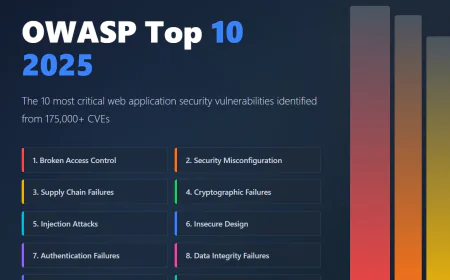
OWASP Top 10
The OWASP Top 10 is one of the most widely recognized awareness documents for web application security. It highlights the most critical security risks affecting modern applications.
Some of the most common vulnerabilities include:
Broken Access Control
Improper access restrictions may allow users to view or modify resources they should not have access to.
Cryptographic Failures
Weak encryption or improper handling of sensitive information can expose confidential data.
Injection Attacks
Injection vulnerabilities occur when untrusted input is interpreted as commands or queries.
Examples include:
- SQL Injection
- Command Injection
- LDAP Injection
Insecure Design
Applications lacking secure architecture or threat modeling often contain weaknesses that attackers can exploit.
Security Misconfiguration
Incorrect server settings, unnecessary services, default credentials, or improper permissions can create significant security risks.
Vulnerable Components
Applications using outdated or unsupported third-party libraries may inherit publicly known vulnerabilities.
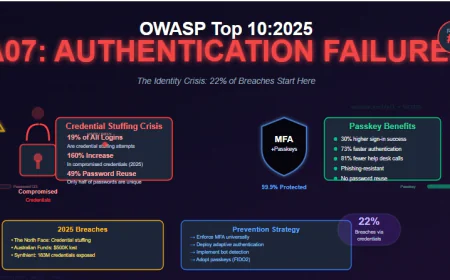
Identification and Authentication Failures
Weak authentication mechanisms increase the risk of credential theft and unauthorized access.
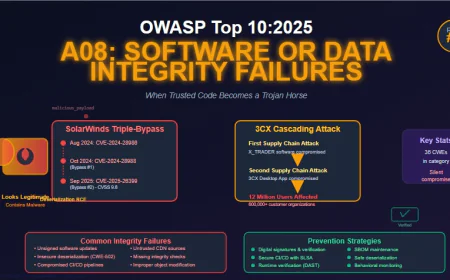
Software and Data Integrity Failures
Applications should verify the integrity of software updates, dependencies, and deployment pipelines to prevent supply chain attacks.
Security Logging and Monitoring Failures
Without proper logging and monitoring, organizations may fail to detect or investigate security incidents promptly.
Server-Side Request Forgery (SSRF)
SSRF vulnerabilities allow attackers to force servers to make unauthorized requests to internal or external systems.
Common Application Security Threats
Applications face a wide range of cyber threats throughout their lifecycle.
SQL Injection
Attackers manipulate database queries by injecting malicious SQL commands into application inputs.
Successful SQL Injection attacks may expose sensitive customer information or modify database records.
Cross-Site Scripting (XSS)
Cross-Site Scripting allows attackers to inject malicious scripts into web pages viewed by other users.
XSS attacks often target user sessions, cookies, and browser activity.
Cross-Site Request Forgery (CSRF)
CSRF tricks authenticated users into performing unintended actions within an application without their knowledge.
Broken Authentication
Weak authentication controls can allow attackers to compromise user accounts through credential stuffing, brute-force attacks, or session hijacking.
Insecure APIs
Poorly secured APIs may expose sensitive information or allow attackers to bypass authorization controls.
API security has become increasingly important as organizations adopt microservices and cloud-native architectures.
Remote Code Execution (RCE)
Remote Code Execution vulnerabilities allow attackers to execute arbitrary code on a target server.
These vulnerabilities often lead to complete system compromise if left unpatched.
Sensitive Data Exposure
Improper encryption, insecure storage, or weak access controls may expose confidential information such as passwords, payment information, and personal data.
Common Application Security Tools
Organizations use a combination of automated and manual tools to secure applications.
Some widely used tools include:
| Tool | Primary Purpose |
|---|---|
| Burp Suite | Web application security testing |
| OWASP ZAP | Dynamic Application Security Testing (DAST) |
| SonarQube | Static code analysis |
| Snyk | Dependency vulnerability scanning |
| Checkmarx | Static Application Security Testing (SAST) |
| Veracode | Application security testing |
| GitHub Advanced Security | Code security scanning |
| GitLab Security | Integrated DevSecOps security |
| Trivy | Container and dependency scanning |
| SQLMap | SQL Injection testing |
These tools help identify vulnerabilities throughout the development lifecycle but should be complemented with manual security reviews and penetration testing.
Real-World Application Security Use Cases
Application Security is essential across industries where software applications handle sensitive information.
Securing E-commerce Platforms
Protect online stores from payment fraud, account takeover, and data breaches.
Protecting Banking Applications
Secure financial transactions, customer accounts, and payment systems against sophisticated cyber threats.
Healthcare Applications
Protect electronic health records (EHRs), patient portals, and healthcare APIs from unauthorized access.
SaaS Platforms
Secure cloud-native applications through continuous vulnerability management, API protection, and secure deployment practices.
Mobile Applications
Protect mobile apps handling sensitive user information by implementing secure authentication, encryption, and runtime protection.
Government Applications
Ensure secure digital services through secure coding, continuous monitoring, and regulatory compliance.
Benefits of Application Security
As organizations increasingly rely on web applications, APIs, mobile apps, and cloud-native platforms, Application Security has become a critical component of every cybersecurity strategy.
Implementing a strong Application Security program offers several long-term benefits.
1. Protects Sensitive Data
Applications often process highly sensitive information such as customer records, financial transactions, healthcare data, and business documents.
Application Security helps protect this data through secure coding practices, encryption, authentication, and access controls.
2. Reduces Cyber Risks
Identifying and fixing vulnerabilities during development significantly reduces the risk of successful cyberattacks.
Continuous security testing helps organizations eliminate weaknesses before attackers can exploit them.
3. Improves Customer Trust
Customers expect organizations to protect their personal information.
Secure applications improve user confidence, strengthen brand reputation, and encourage long-term customer relationships.
4. Supports Regulatory Compliance
Many industries must comply with security and privacy regulations.
Application Security helps organizations meet requirements for:
- ISO 27001
- SOC 2
- GDPR
- PCI DSS
- HIPAA
- DPDPA
Continuous security testing also simplifies compliance audits.
5. Reduces Development Costs
Fixing vulnerabilities after production deployment is significantly more expensive than identifying them during development.
Application Security enables developers to resolve issues earlier, reducing maintenance costs and minimizing business disruption.
6. Strengthens Secure Software Development
Application Security integrates security into every stage of the Software Development Life Cycle (SDLC), supporting secure development practices and continuous improvement.
7. Minimizes Business Disruption
By preventing security incidents, organizations reduce downtime, protect critical services, and maintain business continuity.
Common Application Security Challenges
Despite significant advances in secure software development, organizations continue to face several application security challenges.
Rapid Development Cycles
Modern DevOps and Agile practices require applications to be released quickly.
Without automated security testing, vulnerabilities can easily reach production.
Open-Source Dependencies
Applications often rely on numerous third-party libraries.
Outdated or vulnerable dependencies introduce supply chain risks that require continuous monitoring.
API Security Risks
Modern applications exchange data through APIs.
Improper authentication, weak authorization, and insecure API configurations remain common attack vectors.
Cloud-Native Complexity
Applications deployed across containers, Kubernetes clusters, serverless platforms, and multi-cloud environments require additional security controls.
Skills Gap
Many organizations struggle to recruit experienced application security professionals.
Automated security testing and security awareness training help address this challenge.
Application Security Best Practices
Organizations should adopt a proactive approach to securing applications.
Follow Secure Coding Standards
Developers should implement secure coding practices and regularly review code for common vulnerabilities.
Industry guidance such as the OWASP Secure Coding Practices provides valuable recommendations.
Perform Continuous Security Testing
Application security testing should be integrated into every stage of the Software Development Life Cycle.
Recommended testing includes:
- Static Application Security Testing (SAST)
- Dynamic Application Security Testing (DAST)
- Interactive Application Security Testing (IAST)
- Software Composition Analysis (SCA)
- Penetration Testing
Protect APIs
Organizations should secure APIs by implementing:
- Strong authentication
- Authorization controls
- Input validation
- Rate limiting
- API gateways
- Continuous monitoring
Encrypt Sensitive Information
Sensitive data should be encrypted both in transit and at rest.
Encryption helps protect confidential information even if attackers gain unauthorized access.
Implement Strong Authentication
Applications should use:
- Multi-Factor Authentication (MFA)
- Secure password policies
- Single Sign-On (SSO)
- Identity and Access Management (IAM)
to reduce unauthorized access.
Regularly Patch Applications
Security patches should be applied promptly to operating systems, application frameworks, third-party libraries, and dependencies.
Keeping software up to date reduces exposure to known vulnerabilities.
Conduct Regular Penetration Testing
Periodic penetration testing helps identify vulnerabilities that automated scanners may miss.
Testing should be performed before major releases and after significant infrastructure changes.
How IntelligenceX Helps Organizations Improve Application Security
As modern applications become more complex, organizations require comprehensive security throughout the software development lifecycle.
IntelligenceX provides application security services that help organizations identify vulnerabilities, strengthen secure development practices, and reduce cyber risk.
These services include:
- Application Security Assessments
- Penetration Testing
- Vulnerability Assessments
- Cloud & DevSecOps Security
- Managed Detection & Response (MDR)
- Incident Response
- Compliance Consulting
By combining automated security testing with expert-led assessments, IntelligenceX helps organizations build secure, resilient, and compliant applications.
Conclusion
Applications are now one of the primary targets for cyberattacks, making Application Security an essential part of modern software development.
By integrating security into every stage of the Software Development Life Cycle, organizations can reduce vulnerabilities, protect sensitive information, improve compliance, and deliver secure applications with greater confidence.
Application Security is not a one-time activity-it is a continuous process of secure design, testing, monitoring, and improvement.
Organizations that invest in Application Security today are better prepared to defend against the evolving cyber threats of tomorrow.
Frequently Asked Questions (FAQs)
1. What is Application Security?
Application Security is the practice of protecting software applications from vulnerabilities and cyber threats throughout the Software Development Life Cycle (SDLC).
2. Why is Application Security important?
It helps protect sensitive data, reduce cyber risks, prevent data breaches, improve customer trust, and support regulatory compliance.
3. What is the difference between Application Security and Cybersecurity?
Cybersecurity protects an organization's overall digital environment, while Application Security specifically focuses on securing software applications and APIs.
4. What is SAST?
Static Application Security Testing (SAST) analyzes application source code to identify vulnerabilities before the application is executed.
5. What is DAST?
Dynamic Application Security Testing (DAST) evaluates a running application to identify security vulnerabilities from an external attacker's perspective.
6. What is Software Composition Analysis (SCA)?
SCA identifies vulnerable third-party libraries, open-source components, and software dependencies used within an application.
7. Why is the OWASP Top 10 important?
The OWASP Top 10 highlights the most critical security risks affecting modern web applications and provides guidance for reducing application vulnerabilities.
8. Can Application Security protect APIs?
Yes. Application Security includes API protection through authentication, authorization, input validation, monitoring, and secure API design.
9. How often should organizations perform Application Security testing?
Security testing should be integrated throughout the development lifecycle and performed continuously, especially before production releases.
10. Which industries require Application Security?
Healthcare, finance, retail, government, technology, manufacturing, education, and any organization developing or using software applications benefit from strong Application Security.