















What is Penetration Testing? A Complete Guide to Ethical Hacking
Learn what penetration testing is, why it matters, its types, methodology, benefits, tools, and how organizations use it to identify security vulnerabilities.


Introduction
As cyberattacks become more sophisticated, organizations can no longer rely solely on firewalls, antivirus software, or automated security tools to protect their digital infrastructure. Attackers continuously search for weaknesses in networks, web applications, cloud environments, APIs, and employee accounts. Even a single overlooked vulnerability can result in data breaches, ransomware attacks, financial losses, and reputational damage.
This is where penetration testing, often called pen testing or ethical hacking, plays a critical role.
Penetration testing is a proactive cybersecurity practice where authorized security professionals simulate real-world cyberattacks to identify vulnerabilities before malicious attackers can exploit them. Instead of waiting for an incident to occur, organizations use penetration testing to evaluate the effectiveness of their security controls, uncover hidden weaknesses, and strengthen their overall security posture.
From startups to global enterprises, businesses across industries conduct penetration tests to protect sensitive data, meet regulatory requirements, and improve cyber resilience.
In this guide, you'll learn what penetration testing is, how it works, its different types, methodologies, benefits, common tools, and why it has become an essential component of modern cybersecurity.
Table of Contents
- What is Penetration Testing?
- Why is Penetration Testing Important?
- How Penetration Testing Works
- Types of Penetration Testing
- Penetration Testing Methodology
- Common Penetration Testing Tools
- Benefits of Penetration Testing
- Penetration Testing vs Vulnerability Assessment
- Industries That Need Penetration Testing
- Best Practices
- Frequently Asked Questions
What is Penetration Testing?
Penetration testing is an authorized cybersecurity assessment in which ethical hackers simulate real-world attacks against an organization's systems, applications, or networks to identify security vulnerabilities before they can be exploited by cybercriminals.
Unlike automated vulnerability scans that simply detect known weaknesses, penetration testing goes a step further by attempting to exploit vulnerabilities in a controlled and authorized manner. This approach helps organizations understand how attackers could gain access to sensitive systems, move within the network, or compromise critical data.
A penetration test evaluates not only technical vulnerabilities but also the effectiveness of security controls, system configurations, authentication mechanisms, and incident response capabilities.
The primary goal is not to damage systems but to provide organizations with actionable insights that help improve their overall cybersecurity posture.
Why is Penetration Testing Important?
Cyber threats continue to evolve, making it increasingly difficult for organizations to identify every potential weakness through automated tools alone.
Penetration testing helps organizations stay ahead of attackers by uncovering vulnerabilities before they become security incidents.
Some of the key reasons why penetration testing is important include:
- Identifies exploitable security vulnerabilities
- Prevents data breaches and ransomware attacks
- Protects sensitive customer and business information
- Validates existing security controls
- Supports compliance with industry regulations
- Reduces financial and operational risks
- Improves incident response readiness
- Strengthens customer trust and confidence
Organizations that perform regular penetration testing are often better prepared to defend against emerging cyber threats.
How Penetration Testing Works
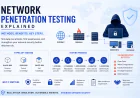
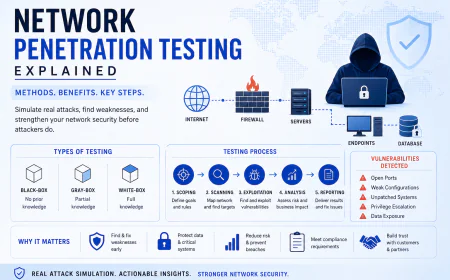
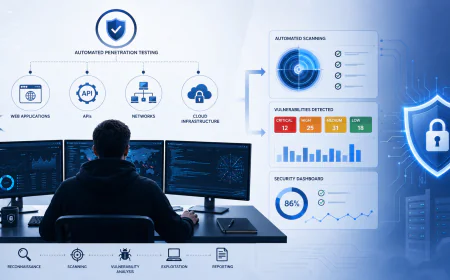
A penetration test follows a structured process designed to simulate the tactics, techniques, and procedures used by real-world attackers.
Security professionals begin by defining the scope of the assessment, identifying target systems, and establishing testing objectives. They then gather publicly available information about the target, identify vulnerabilities, attempt controlled exploitation, assess the potential business impact, and document their findings in a detailed report.
The final report typically includes:
- Identified vulnerabilities
- Risk severity
- Proof of exploitation
- Business impact
- Technical recommendations
- Remediation guidance
Organizations use these findings to prioritize security improvements and reduce overall cyber risk.
Types of Penetration Testing
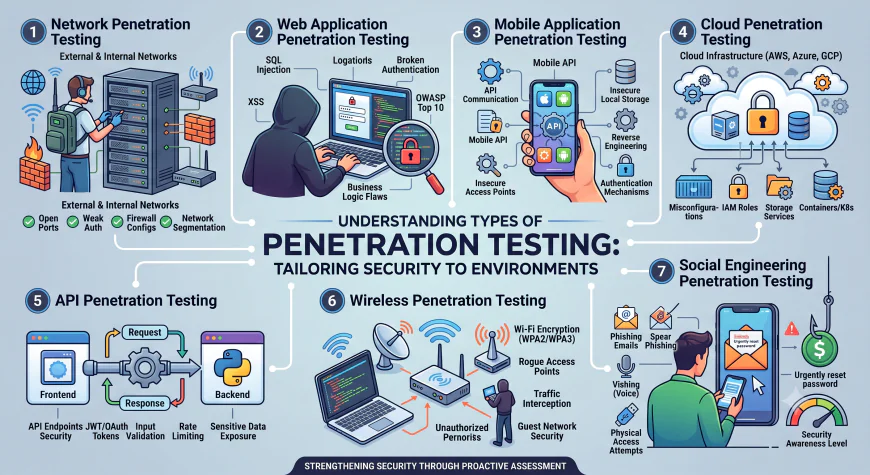
Different environments require different types of penetration testing. Depending on the organization's infrastructure and security objectives, ethical hackers may focus on networks, applications, cloud environments, APIs, or even human behavior.
1. Network Penetration Testing
Network penetration testing evaluates the security of internal and external networks.
The objective is to identify vulnerabilities in firewalls, routers, switches, servers, wireless networks, and network services that could allow attackers to gain unauthorized access.
Common areas assessed include:
- Open ports
- Weak authentication
- Misconfigured services
- Network segmentation
- Remote access security
- Firewall configurations
2. Web Application Penetration Testing
Web applications are among the most common targets for cyberattacks.
A web application penetration test identifies vulnerabilities such as:
- SQL Injection
- Cross-Site Scripting (XSS)
- Broken Authentication
- Cross-Site Request Forgery (CSRF)
- Insecure File Uploads
- Business Logic Flaws
- Session Management Issues
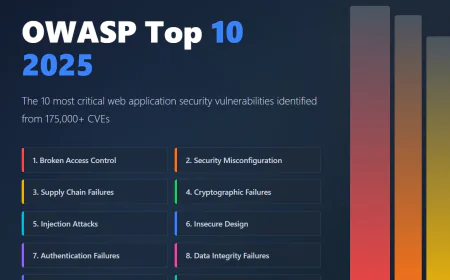
Testing is typically aligned with the OWASP Top 10, one of the most widely recognized standards for web application security.
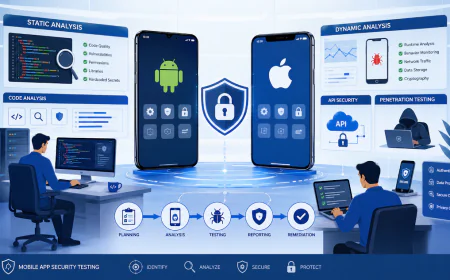
3. Mobile Application Penetration Testing
As mobile applications increasingly handle financial transactions and personal information, securing them has become essential.
Mobile penetration testing evaluates:
- Android applications
- iOS applications
- API communication
- Local data storage
- Authentication mechanisms
- Encryption implementation
- Reverse engineering risks
The objective is to identify weaknesses that could expose sensitive user information or allow unauthorized access.
4. Cloud Penetration Testing
Organizations operating in cloud environments must also assess the security of their cloud infrastructure.
Cloud penetration testing focuses on identifying security weaknesses in:
- Cloud workloads
- Virtual machines
- Storage services
- Identity and Access Management (IAM)
- APIs
- Cloud configurations
- Containers and Kubernetes environments
Cloud testing helps organizations reduce the risk of misconfigurations and unauthorized access while supporting secure cloud adoption.
Additional Types of Penetration Testing
While network, web application, mobile, and cloud penetration testing are among the most common, organizations often require specialized testing based on their infrastructure and business needs.
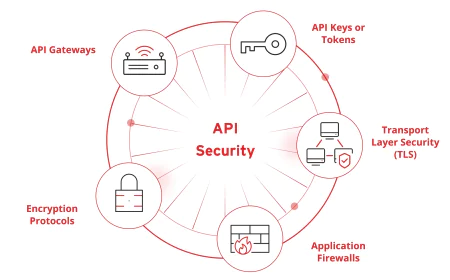
5. API Penetration Testing
Modern applications rely heavily on APIs (Application Programming Interfaces) to exchange data between systems. If APIs are not properly secured, attackers can exploit them to access sensitive information or manipulate application behavior.
API penetration testing evaluates:
- Authentication and authorization
- Input validation
- Business logic flaws
- Rate limiting
- Sensitive data exposure
- API endpoint security
- Token security (JWT, OAuth)
With the rapid growth of cloud-native applications, API security has become a critical component of modern cybersecurity.
6. Wireless Penetration Testing
Wireless networks can become an easy entry point for attackers if they are not configured securely.
Wireless penetration testing focuses on identifying weaknesses in:
- Wi-Fi encryption
- Access point configuration
- Rogue access points
- Wireless authentication
- Guest network security
- Wireless traffic interception
Organizations with multiple office locations should regularly assess the security of their wireless infrastructure.
7. Social Engineering Penetration Testing
Not every cyberattack targets technology; many target people.
Social engineering penetration testing evaluates how employees respond to real-world attack techniques such as:
- Phishing emails
- Spear phishing
- Voice phishing (Vishing)
- SMS phishing (Smishing)
- Physical access attempts
- USB baiting
The goal is to measure security awareness and identify areas where additional employee training is required.
Penetration Testing Approaches
The level of information provided to the tester determines the type of penetration testing approach used.
Black Box Testing
In a Black Box penetration test, the tester has little or no prior knowledge of the target environment.
This approach closely simulates how an external attacker would attempt to compromise an organization's systems.
Advantages include:
- Realistic attack simulation
- Unbiased assessment
- Evaluation of external security posture
However, Black Box testing generally requires more time because testers must first gather information about the target.
White Box Testing
In White Box testing, the security team receives complete knowledge of the target environment before testing begins.
This information may include:
- Source code
- Network diagrams
- Architecture documentation
- User credentials
- Configuration details
White Box testing provides deeper coverage and helps identify vulnerabilities that may not be visible during external testing.
Gray Box Testing
Gray Box testing combines elements of both Black Box and White Box testing.
Testers receive limited information, such as standard user credentials, allowing them to simulate an insider attack or a compromised employee account.
Gray Box assessments often provide the best balance between realism and testing efficiency.
Penetration Testing Methodology
Professional penetration testing follows a structured methodology to ensure consistent, repeatable, and comprehensive security assessments.
Although methodologies may vary slightly between organizations, most penetration tests include the following phases.
Phase 1: Planning and Scoping
Every successful penetration test begins with careful planning.
During this phase, organizations define:
- Testing objectives
- Scope of engagement
- Target systems
- Rules of engagement
- Authorized testing windows
- Reporting requirements
Proper planning ensures that testing remains safe, controlled, and aligned with business objectives.
Phase 2: Reconnaissance
Reconnaissance, also known as information gathering, involves collecting publicly available information about the target.
This may include:
- Domain information
- DNS records
- Public IP addresses
- Employee email addresses
- Technology stack
- Open ports
- Public repositories
Attackers often spend significant time gathering information before launching an attack, making this phase an essential part of penetration testing.
Phase 3: Vulnerability Identification
Once sufficient information has been collected, testers identify potential weaknesses within the target environment.
Common vulnerabilities include:
- Outdated software
- Weak passwords
- Missing security patches
- Misconfigured cloud services
- Exposed administrative interfaces
- Insecure APIs
- Weak encryption
Automated vulnerability scanners may assist during this phase, but manual verification is necessary to eliminate false positives.
Phase 4: Exploitation
Exploitation is the stage where ethical hackers attempt to safely exploit identified vulnerabilities.
The objective is to determine whether vulnerabilities can actually be used by attackers to gain unauthorized access or elevate privileges.
Examples include:
- SQL Injection
- Command Injection
- Cross-Site Scripting (XSS)
- Authentication bypass
- Privilege escalation
- Remote code execution
Exploitation is performed carefully to avoid disrupting business operations while demonstrating the potential impact of a successful attack.
Phase 5: Post-Exploitation
After gaining access, testers evaluate the potential impact of the compromise.
Typical objectives include:
- Assessing lateral movement
- Identifying sensitive data exposure
- Testing privilege escalation
- Evaluating persistence techniques
- Measuring overall business risk
This phase helps organizations understand how far an attacker could progress after the initial breach.
Phase 6: Reporting
Reporting is one of the most valuable outcomes of a penetration test.
A professional penetration testing report typically includes:
- Executive summary
- Scope of testing
- Methodology
- Vulnerabilities identified
- Risk ratings (Critical, High, Medium, Low)
- Proof of Concept (PoC)
- Screenshots
- Business impact
- Technical remediation recommendations
A clear report enables security teams to prioritize remediation efforts and improve their overall security posture.
Common Penetration Testing Tools
Security professionals use a combination of commercial and open-source tools during penetration testing.
Some widely used tools include:
| Tool | Primary Purpose |
|---|---|
| Nmap | Network discovery and port scanning |
| Burp Suite | Web application security testing |
| Metasploit Framework | Exploitation and security testing |
| OWASP ZAP | Web vulnerability testing |
| Nessus | Vulnerability assessment |
| Wireshark | Network traffic analysis |
| Nikto | Web server vulnerability scanning |
| Hydra | Password auditing |
| Gobuster | Directory and file enumeration |
| SQLMap | SQL Injection testing |
It's important to note that these tools assist testers but do not replace manual analysis. Experienced penetration testers combine automated tools with human expertise to identify complex vulnerabilities and business logic flaws.
Benefits of Penetration Testing
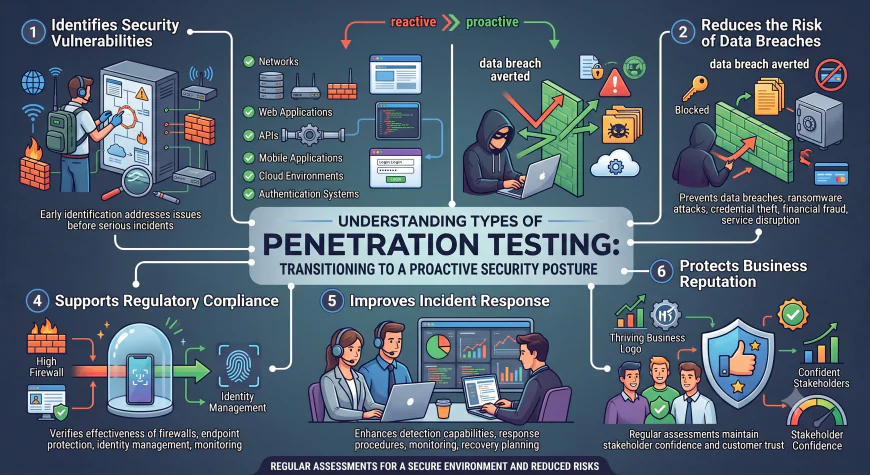
Regular penetration testing helps organizations move from a reactive security approach to a proactive one. Instead of responding after a cyberattack occurs, businesses can identify and remediate vulnerabilities before attackers exploit them.
Some of the key benefits include:
1. Identifies Security Vulnerabilities
Penetration testing uncovers weaknesses that may not be detected through automated vulnerability scanners alone.
These vulnerabilities may exist in:
- Networks
- Web applications
- APIs
- Mobile applications
- Cloud environments
- Authentication systems
Early identification allows organizations to address issues before they become serious security incidents.
2. Reduces the Risk of Data Breaches
Cybercriminals often exploit known vulnerabilities to gain unauthorized access to sensitive systems and data.
By identifying exploitable weaknesses in advance, organizations can significantly reduce the likelihood of:
- Data breaches
- Ransomware attacks
- Credential theft
- Financial fraud
- Service disruption
3. Validates Existing Security Controls
Many organizations invest heavily in firewalls, endpoint protection, identity management, and monitoring solutions.
Penetration testing verifies whether these controls actually prevent real-world attacks rather than simply assuming they are effective.
4. Supports Regulatory Compliance
Many cybersecurity standards and regulations recommend or require periodic security testing.
Examples include:
- ISO 27001
- PCI DSS
- SOC 2
- HIPAA
- GDPR
Regular penetration testing helps organizations demonstrate their commitment to maintaining a secure environment and meeting compliance obligations.
5. Improves Incident Response
Penetration testing provides valuable insights into how attackers move through an environment.
These insights help security teams improve:
- Detection capabilities
- Response procedures
- Security monitoring
- Recovery planning
Organizations become better prepared to detect and contain future attacks.
6. Protects Business Reputation
A successful cyberattack can damage customer trust, disrupt operations, and negatively impact an organization's reputation.
Regular security assessments demonstrate that security is taken seriously and help maintain stakeholder confidence.
Penetration Testing vs Vulnerability Assessment
Although these terms are often used interchangeably, they serve different purposes.
| Feature | Penetration Testing | Vulnerability Assessment |
|---|---|---|
| Objective | Exploit vulnerabilities safely | Identify vulnerabilities |
| Manual Testing | Extensive | Limited |
| Exploitation | Yes | No |
| Business Impact | Demonstrated | Estimated |
| Depth | High | Moderate |
| Output | Security assessment with proof of exploitation | List of identified vulnerabilities |
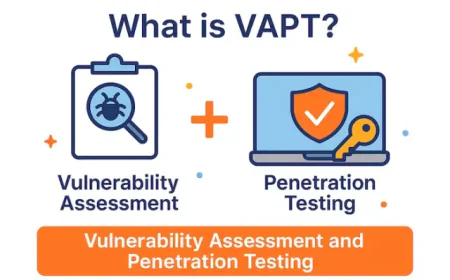
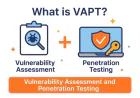
A vulnerability assessment tells you what vulnerabilities exist, while a penetration test demonstrates which vulnerabilities can actually be exploited and what their impact could be.
Organizations often perform vulnerability assessments more frequently and schedule penetration testing periodically or after significant infrastructure changes.
Industries That Need Penetration Testing
Almost every industry that stores or processes digital information can benefit from penetration testing.
Common sectors include:
- Financial Services
- Healthcare
- Government
- Manufacturing
- Education
- E-commerce
- Telecommunications
- Technology Companies
- Software-as-a-Service (SaaS)
- Cloud Service Providers
Regardless of industry, organizations handling sensitive customer information should include penetration testing as part of their cybersecurity program.
Penetration Testing Best Practices
To maximize the value of a penetration test, organizations should follow established best practices.
These include:
- Conduct penetration testing regularly.
- Test after major infrastructure or application changes.
- Define a clear testing scope.
- Prioritize remediation based on risk.
- Validate fixes through retesting.
- Integrate penetration testing into the software development lifecycle (SDLC).
- Combine automated tools with manual testing.
- Keep detailed documentation of findings and remediation efforts.
Penetration testing should be viewed as a continuous improvement process rather than a one-time security exercise.
How IntelligenceX Supports Organizations with Penetration Testing
Identifying vulnerabilities is only the first step toward improving cybersecurity. Organizations also need experienced security professionals who can validate risks, provide remediation guidance, and help strengthen their overall security posture.
IntelligenceX offers professional Penetration Testing services designed to help organizations identify exploitable vulnerabilities across web applications, networks, APIs, cloud environments, and enterprise infrastructure.
Security assessments are tailored to an organization's environment and include detailed technical findings, risk ratings, proof-of-concept validation, and practical remediation recommendations.
Penetration testing is often combined with additional cybersecurity services such as:
- Cloud Security
- Managed Detection & Response (MDR)
- Incident Response
- DevSecOps
- Security Awareness Training
- Compliance Assessments
Together, these services help organizations reduce cyber risk, improve resilience, and maintain compliance with industry standards.
Conclusion
Cyber threats continue to evolve, making proactive security testing more important than ever. Penetration testing enables organizations to identify weaknesses before attackers can exploit them, validate existing security controls, and strengthen their overall cybersecurity posture.
Whether protecting a small business, a cloud-native application, or a large enterprise network, penetration testing provides valuable insights that support informed security decisions and reduce business risk.
As part of a comprehensive cybersecurity strategy, regular penetration testing should work alongside continuous monitoring, employee awareness, secure development practices, and ongoing risk management to build long-term cyber resilience.
Frequently Asked Questions (FAQs)
1. What is penetration testing?
Penetration testing is an authorized security assessment where ethical hackers simulate real-world cyberattacks to identify exploitable vulnerabilities in systems, applications, or networks.
2. Why is penetration testing important?
It helps organizations identify security weaknesses before cybercriminals can exploit them, reducing the risk of data breaches and operational disruption.
3. How often should penetration testing be performed?
Most organizations perform penetration testing annually or after significant infrastructure, application, or cloud environment changes.
4. Is penetration testing legal?
Yes. Penetration testing is legal when performed with proper written authorization from the system owner.
5. What is the difference between ethical hacking and penetration testing?
Ethical hacking is a broader discipline that includes various security assessments, while penetration testing is a structured engagement focused on evaluating the security of specific systems within an agreed scope.
6. Does penetration testing affect business operations?
Professional penetration testing is carefully planned to minimize disruption, although certain tests may require maintenance windows depending on the environment.
7. What industries require penetration testing?
Financial services, healthcare, government, technology, manufacturing, education, retail, and organizations handling sensitive customer data commonly perform penetration testing.
8. What are the main types of penetration testing?
Common types include network, web application, mobile application, cloud, API, wireless, and social engineering penetration testing.
9. Which tools are commonly used during penetration testing?
Popular tools include Nmap, Burp Suite, Metasploit Framework, OWASP ZAP, Nessus, Wireshark, Nikto, Hydra, Gobuster, and SQLMap.
10. Can penetration testing prevent cyberattacks?
No security assessment can guarantee complete protection, but regular penetration testing significantly reduces cyber risk by identifying and addressing vulnerabilities before attackers exploit them.