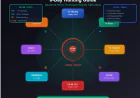





















0-Day Hunting Guide: Recon Techniques Nobody Talks About
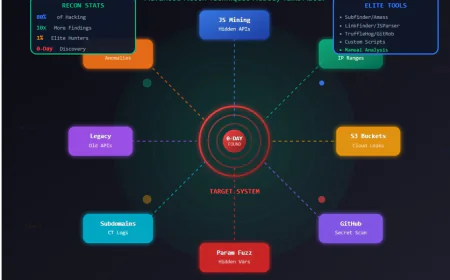
Master zero-day vulnerability hunting through advanced reconnaissance techniques that elite bug bounty hunters use but rarely share: JavaScript mining, ASN enumeration, cloud bucket discovery, GitHub secret scanning, and behavioral anomaly detection, the underground methods separating the top 1% from everyone else.


Most security researchers run the same tools: Subfinder, Amass, Nuclei. They find the same vulnerabilities everyone else finds. Meanwhile, elite bug bounty hunters earning six figures annually use advanced reconnaissance techniques that remain largely undocumented. Surface-level scans won't cut it anymore, manual recon, automation, and custom scripts are what separate the best from the rest.
This guide reveals the underground recon methods that actually discover zero-day vulnerabilities before anyone else.
Why Traditional Recon Fails
Recon is 80% of hacking—mastery separates amateurs from professionals. Yet most researchers stop after finding subdomains and running automated scanners. They miss:
- Hidden endpoints buried in JavaScript
- Legacy infrastructure forgotten by developers
- Cloud misconfigurations invisible to subdomain enumeration
- Leaked credentials scattered across GitHub commits
- Internal APIs exposed through parameter pollution
Threat hunters are continuously and actively scouring the environment for clues of a malicious incursion, going far beyond surface-level automated scans.
Technique #1: JavaScript Mining—The Treasure Map
Think of JavaScript like a treasure map — devs hide stuff in it all the time. Every JavaScript file contains clues to hidden functionality.
Advanced JS Enumeration:
# Extract all JS files
echo "target.com" | waybackurls | grep ".js$" | sort -u > js_files.txt
cat js_files.txt | httpx -mc 200 -silent > live_js.txt
# Mine endpoints from JS
cat live_js.txt | while read url; do
python3 LinkFinder.py -i $url -o cli
done | sort -u > hidden_endpoints.txt
# Extract API keys and secrets
cat live_js.txt | while read url; do
curl -s $url | grep -E "(api[_-]?key|secret|token|password)"
done | tee sensitive_data.txt
What Others Miss:
- Internal API endpoints not documented
- Debugging functions left in production
- Commented-out features with security flaws
- Hardcoded credentials and tokens
- Hidden admin panels
Real Example: A researcher found a /api/v2/internal/users endpoint in obfuscated JavaScript that led to a $25,000 bounty for complete user database access.
Technique #2: ASN Enumeration—Expanding the Attack Surface
Most hunters limit themselves to provided scope. ASN Enumeration: Expand scope by mapping IP ranges using bgp.he.net or tools like asnlookup.
ASN Discovery Process:
# Find company ASN
whois target.com | grep -i "origin"
# Enumerate all IP ranges
curl -s "https://api.bgpview.io/asn/AS15169/prefixes" | jq '.data.ipv4_prefixes[].prefix'
# Discover hidden infrastructure
for ip in $(cat ip_ranges.txt); do
echo $ip | httpx -silent -title -status-code
done
Why It Works: Companies often have:
- Development servers on separate ASNs
- Acquired companies with old infrastructure
- Testing environments with weak security
- Legacy systems nobody remembers
Case Study: Hunter expanded from 50 in-scope subdomains to 500+ servers by ASN enumeration, discovering a completely forgotten admin panel vulnerable to SQL injection.
Technique #3: Cloud Storage Hunting—The Low-Hanging Fruit
Cloud Recon: Analyze cloud storage leaks (Amazon S3, Google Cloud Buckets, etc.).
S3 Bucket Discovery:
# Generate bucket name permutations
echo "company" | sed 's/$/\ncompany-dev\ncompany-prod\ncompany-backup\ncompany-staging/' > buckets.txt
# Test bucket access
while read bucket; do
aws s3 ls s3://$bucket --no-sign-request 2>&1 | grep -v "NoSuchBucket"
done < buckets.txt
# Google Cloud buckets
curl -s "https://www.googleapis.com/storage/v1/b/company-bucket-name" | jq .
Common Misconfigurations:
- Public read access to sensitive data
- Writable buckets allowing file upload
- Backup databases accessible without auth
- Source code repositories exposed
Reality Check: One hunter found open S3 bucket containing PII for 2 million users—$50,000 critical severity bounty.
Technique #4: GitHub Secret Scanning—Developers' Worst Habit
cat js_files.txt | gf aws-keys | tee aws_keys.txt finds exposed credentials, but go deeper.
Advanced GitHub Reconnaissance:
# Search organization repositories
curl -s "https://api.github.com/orgs/target-company/repos" | jq -r '.[].html_url'
# Find secrets in commits
python3 truffleHog.py --regex --entropy=True https://github.com/target/repo
# Search code for patterns
gh api search/code?q=org:target+password | jq '.items[].html_url'
# Historical commits matter
git log --all --full-history --source -- *secret* *key* *password*
What To Look For:
- AWS/Azure/GCP credentials
- Database connection strings
- API keys and tokens
- Private keys and certificates
- Internal IP addresses and endpoints
Technique #5: Parameter Discovery—Hidden Functionality
Most automated tools miss critical parameters.
Advanced Parameter Fuzzing:
# Extract parameters from JavaScript
python3 parameth.py -u target.com -d params.txt
# Test for hidden parameters
ffuf -u "https://target.com/api/users?FUZZ=test" -w params.txt -mc 200
# Parameter pollution testing
curl "https://target.com/api?id=1&id=2"
curl "https://target.com/api?id=1&admin=true"
Critical Parameters:
debug=true- Exposes internal infoadmin=1- Privilege escalationcallback=- JSONP exploitationredirect=- Open redirect chains
Technique #6: Certificate Transparency Logs—The Goldmine
curl -s "https://crt.sh/?q=%.target.com&output=json" | jq -r '.[].name_value' | sed 's/*.//g' | anew crtsh_subs.txt
Go Deeper:
# Historical certificate data
curl -s "https://crt.sh/?q=%.target.com&output=json" | jq -r '.[].name_value' | sort -u
# Find wildcard certificates
curl -s "https://crt.sh/?q=*.*.target.com&output=json" | jq -r '.[].name_value'
# Discover email addresses
curl -s "https://crt.sh/?q=%@target.com&output=json" | jq -r '.[].name_value'
Technique #7: Behavioral Anomaly Detection for 0-Days
Defenders use AI for behavior based detection, threat hunting, and automated response (SOAR), which are essential for identifying the anomalous behavior of a zero day exploit without a pre existing signature.
Hunting Techniques:
# Monitor for unusual behavior patterns
# Look for:
- Unexpected process spawning
- Unusual network connections
- Anomalous file access patterns
- Privilege escalation attempts
- Memory corruption indicators
Post-Exploitation Behavior: Rather than focusing on the initial attack vector, proactive threat hunting is predicated on the ability of highly skilled experts to uncover recognized patterns of adversary behavior.
Watch for:
- Active Directory enumeration
- Webshell process spawning
- Lateral movement attempts
- Data staging and exfiltration
- Credential dumping activities
Technique #8: Legacy Endpoint Discovery
Developers love to forget. Those legacy endpoints from 2018? They're still alive — and probably still vulnerable.
Time-Travel Reconnaissance:
# Wayback Machine enumeration
echo "target.com" | waybackurls | grep "api\|admin\|portal\|login" > legacy_endpoints.txt
# Test historical endpoints
cat legacy_endpoints.txt | httpx -silent -mc 200,403,401 -title
# Archive.org deep dive
wget -r -l 2 "https://web.archive.org/web/*/target.com/*admin*"
Technique #9: Subdomain Permutation—Beyond Basic Enumeration
Permutation & Alteration: Tools like dnsgen and altdns help discover hidden assets.
Advanced Permutation:
# Generate intelligent permutations
cat subdomains.txt | dnsgen - | massdns -r resolvers.txt -o S -w results.txt
# Custom permutations
for sub in dev staging test admin portal api; do
echo "$sub.target.com"
echo "$sub-target.com"
echo "target-$sub.com"
done | dnsx -silent
Technique #10: Network-Level Reconnaissance
Port Scanning Beyond Nmap:
# Masscan for speed
sudo masscan -p1-65535 192.168.1.0/24 --rate=10000
# Focus on critical ports
nmap -sV -p 22,80,443,3306,5432,6379,27017,9200 target.com
# Identify exposed databases
echo "target.com" | nuclei -t exposed-panels/ -silent
The Elite Mindset: What Makes 1% Hunters Different
1. Automation + Manual Analysis Automation (e.g., Amass + Recon-ng) scales findings but manual analysis catches edge cases.
2. Continuous Monitoring Recon is a continuous process. Stay updated, automate what you can, and manually analyze what automation misses.
3. Custom Tooling Elite hunters write custom scripts for their specific hunting style.
4. Pattern Recognition Experience identifying subtle anomalies that tools miss.
5. Persistence Many high-paying vulnerabilities are only found by those who dig deeper.
Building Your 0-Day Hunting Workflow
Phase 1: Asset Discovery (30 minutes)
- Subdomain enumeration
- ASN expansion
- Certificate transparency mining
- Cloud storage discovery
Phase 2: Deep Reconnaissance (2-4 hours)
- JavaScript endpoint extraction
- Parameter discovery
- GitHub secret scanning
- Legacy endpoint testing
Phase 3: Behavioral Analysis (Ongoing)
- Monitor unusual patterns
- Track post-exploitation indicators
- Behavioral anomaly detection
- Threat intelligence correlation
Phase 4: Exploitation (1-3 hours)
- Validate findings
- Develop proof-of-concept
- Document impact
- Responsible disclosure
Tools of the Trade
Essential Kit:
- Subfinder, Amass, Assetfinder (subdomain enum)
- httpx, nuclei (HTTP probing)
- LinkFinder, JSParser (JavaScript mining)
- TruffleHog, GitRob (GitHub secrets)
- FFUF, Arjun (parameter discovery)
- Masscan, Nmap (port scanning)
Custom Scripts: Write your own tools for:
- Unique permutation patterns
- Specific API enumeration
- Custom parameter fuzzing
- Automated monitoring
The Future: AI-Powered Recon
The rise of AI-driven recon (e.g., SpiderFoot) will democratize advanced techniques, but human intuition remains irreplaceable for interpreting outliers like exposed internal APIs or legacy systems.
By 2026, expect:
- LLM-powered vulnerability correlation
- Automated exploit chain discovery
- Real-time threat intelligence integration
- Predictive vulnerability analysis
Conclusion: Beyond the Basics
Zero-day hunting isn't about running more tools—it's about thinking differently. While others run automated scanners, elite researchers:
✅ Mine JavaScript for hidden endpoints ✅ Expand scope through ASN enumeration
✅ Hunt cloud misconfigurations systematically ✅ Search GitHub history for leaked secrets ✅ Test forgotten legacy infrastructure ✅ Discover parameters automation misses ✅ Analyze behavioral anomalies manually
The Reality: Zero-day exploit = attack on an unknown flaw with zero vendor patch days. Leaves users defenseless at first strike.
Finding them requires going beyond what everyone else does. Start with these techniques, develop your methodology, and build custom tooling. The best researchers aren't those with the most tools, they're those with the deepest understanding of where vulnerabilities hide.
Now go hunt.