


















Why You Should Stop Ignoring Software Updates
Learn why timely software updates are essential for cybersecurity, device performance, and data protection. Discover how regular updates patch vulnerabilities, prevent cyberattacks like ransomware, and enhance system stability. Stop ignoring software updates and safeguard your digital life with these crucial maintenance practices.


Software updates are clearly more than just rare pop-ups in the fast-changing digital world, they indeed are the crucial lifelines that enable the continual running of your devices, at the same time keeping them secure, efficient, and compatible. Unfortunately, a great number of users tend to ignore or postpone the updates and therefore, more often than not, unintentional risks to their personal and organizational cybersecurity arise.
What Are Software Updates?
Software updates are, at times, referred to as patches or upgrades, and they consist of the changes which software developers release to enhance or rectify the existing application, system, or platform. Different kinds of updates exist:
- Security patches: These rectify the weaknesses found in the software which could be taken advantage of by hackers if not taken care of.
- Feature updates: New functionalities, updated user interfaces, and improved capabilities are the outcomes of this type of update.
- Bug fixes: This one is meant to eliminate errors or malfunctions that adversely affect efficiency or even lead to system crashes.
- Performance improvements: These updates aim at resource optimization which results in faster and smoother running of the software.
Every single update is aimed at making sure that the software will continue to be tough, safe, and efficient throughout its lifecycle.
The Vital Cybersecurity Function of Updates
Cybercriminals, on the other hand, are always and everywhere looking for weaknesses in software systems' security. They put their hands on the vulnerabilities in software that have not been fixed to their advantage and in that way gain access either by installing ransomware, taking data, or controlling the device. On the other hand, updates are the security measure that helps the software to stay ahead of the hackers.
Think of 2017's massive WannaCry ransomware attack. A security gap in Windows was the reason that this attack got to more than 200,000 computers worldwide. Microsoft had sent a fix out a few months before that, but still many users did not roll out the update, thus opening themselves up to being hit by such a massive and destructive cyberattack.
Software updates, when applied regularly, not only protect against the newest threats but also act as a shield for entire operating systems, applications, and security tools. In addition, the capacity of antivirus and firewall to detect and block malware is augmented due to the updates that have been applied.
Software Updates Ignored Will Cost You
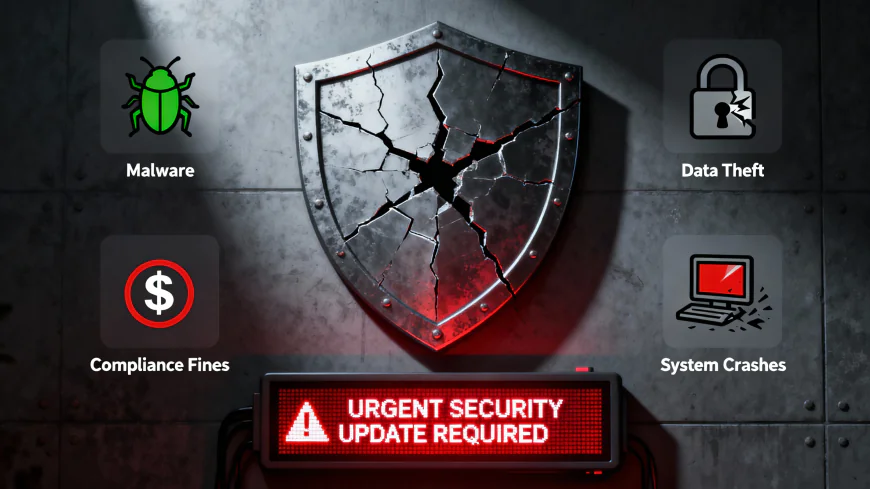
Neglecting or postponing software updates can lead to serious penalties:
- Security risks raised: Out of date software with holes in the security layer becomes an easy target.
- Rise in malware attacks: Your system can get infected by the most recent malware, such as viruses and ransomware, because security patches are not updated.
- Data theft: Cybercriminals can get to confidential data, resulting in either identity theft or financial fraud.
- Non-compliance: Various sectors have set standards for software maintenance; non-adherence to the standards may lead to fines.
- Unreliability of the system: Old software often causes bugs and compatibility issues that lead to crashing or slow performance.
- Deprivation of new features: Gaining access to the latest improvements and functionalities is denied.
The consequences of these risks pile up the longer the maintenance of updates is neglected which in turn raises the likelihood of cyber incidents or loss of business through downtime becoming more and more frequent.
Security Plus: Performance and Compatibility
The updates not only provide protection but also improve your digital experience. Software updates effectively fix the bugs and thus prevent the crashes and glitches which in turn leads to enhancement of the overall stability. They also manage the resource usage in a way that the device becomes faster and more responsive.
Furthermore, updates not only to keep your device ecosystem modern but also to provide you with the best possible user experience. The interconnection between applications, platforms, and devices is so close nowadays that keeping them up to date will eliminate any potential technical issues and thus ensure uninterrupted workflow.
Legal compliance is frequently linked to the use of supported software versions especially in sectors like finance and healthcare where up-to-date software is a must to meet the legal requirements and to avoid getting into trouble.
Best Practice for Software Updates Management
To tap into the full potential of software updates when it comes to their protective benefits:
- Automatic updates should be enabled: This is an option given by most operating systems and applications that allows the installation of updates without any waiting time.
- Regular manual checks: For software that doesn't have an auto-update feature, set up a routine checking to make sure that new patches don't go unnoticed.
- Update every device: Don’t forget computers, smartphones, tablets, and Internet of Things devices, cybersecurity is only as strong as your weakest endpoint.
- Data back-up: Before the implementation of major updates, secure important data first to avoid any loss during unforeseen issues.
- User education: Whether at home or in the office, knowledge about the importance of updates lessens the negligence.
Using comprehensive patch management tools or security platforms can smoothen the process, allowing updates to occur in a timely manner without any disturbances.
The Importance of Updates Highlighted by Real-World Cases
Among the many cybersecurity incidents and data breaches facilitated by unpatched software were:
- An unpatched flaw in Apache Struts led to the leakage of 147 million customers' data in the case of the Equifax hack.
- Ransomware gangs frequently attacked hospitals that had postponed essential updates.
- Obsolete software as a primary reason is mentioned by most companies that do not pass the compliance checks.
That is, not updating the software results in financial loss, damage to the company's image, and even legal fines the very costs the mentioned cases prove.

Conquering Update Doubts
The main reasons for not implementing the updates are usually the shortage of time, the fear of unavailability of the system, or the expectation of bugs caused by the new version. Nevertheless, these can be made acceptable by:
- Doing the updates during the night or at weekends.
- Using staged releases in the company to limit the effect on operations.
- Trying out the updates in a small area before they are rolled out everywhere.
Perceiving updates as regular digital maintenance just like car servicing will help get rid of security worries and develop a security-first mentality instead.
Conclusion
Scarce are the software updates but they can be seen as one of the major supports of cybersecurity and digital performance, not just as optional extras. Their avoidance threatens your information, privacy, and gadget's reliability. On the contrary, the up-to-date software:
- Secures you from changing cyber threats.
- Imparts stability and quickness.
- Guarantees the compatibility with the latest tech.
- Facilitates the compliance with regulations.
- Gives access to new features which enhance the user experience.
Turn software updates into the very first priority. The first step is to turn on the automatic updates, and then make the people aware, both at home and in your organization. With this approach, you change the potentially difficult updates into easy, yet powerful, defenses that protect your digital life.
Stop neglecting software updates from now on and make them your first defense line against cybercrime and inefficient systems. Your safety, productivity, and comfort depend on it.