











3 Facts About Cybersecurity You Didn’t Know You Needed
Discover three surprising cybersecurity facts you didn’t know you needed. Learn how human error, smart devices, and digital resilience shape modern online protection and what steps you can take to stay secure in a connected world.

We inhabit a world that is extremely connected digitally, where every action like clicking, liking, and logging in is recorded. The issue of cybersecurity has ceased to be confined to the tech experts’ domain and has now become everyone’s problem. However, apart from the usual recommendations such as “create complex passwords” or “stay away from phishing links,” there are some deeper realities regarding cybersecurity that most people do not even think of.
Let us now consider three incredibly surprising points which stand indeed their value or better, their necessity among the major cybersecurity issues and how attributing them to your online protection can completely change the way you think about it.
1. The Biggest Cyber Risk Comes From Human Beings, Not Attackers
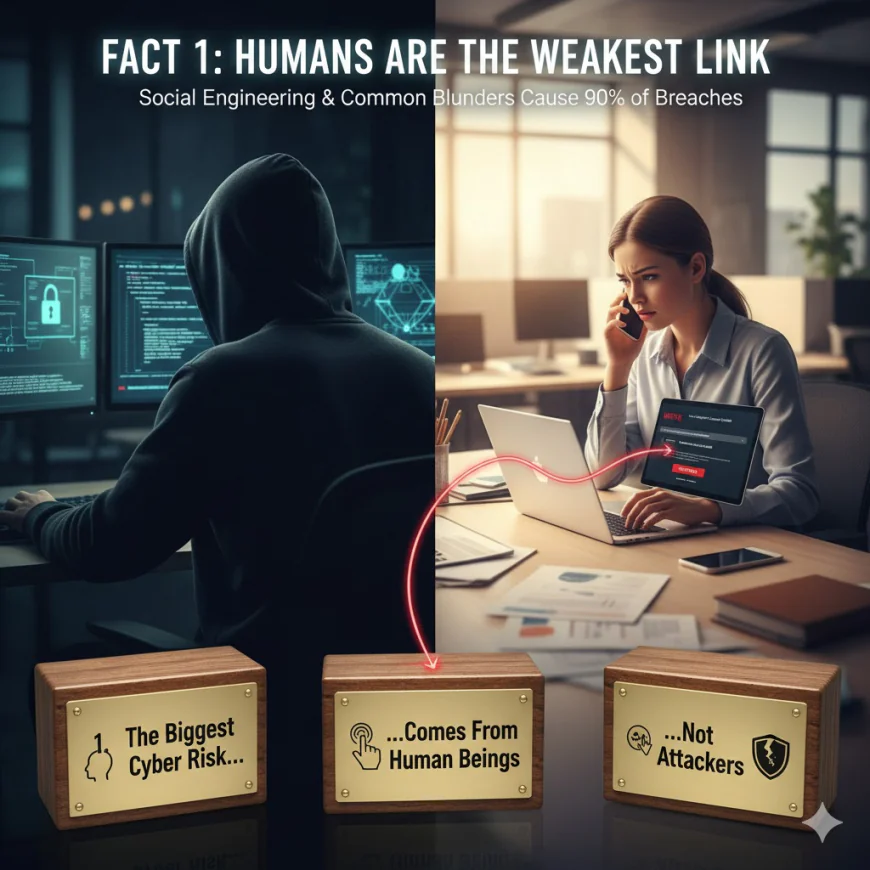
The moment you think of a cyberattack, the image of a shadowy person in a hoodie cracking the firewall comes to your mind. Nevertheless, the truth is that most of the data leaks and cyberattacks originate from the very common blunders of normal individuals — one more click, a too friendly chat, or sending the attachment to the wrong email address.
Of course, this is not just a guess. Several studies together have concluded that human mistakes are responsible for almost 90% of all data breaches. To put it differently, the hacker's skillfulness does not always determine the extent of the damage, the user's lack of awareness often does.
The Psychology Behind Cyber Mistakes
People are naturally made to trust and want things to be easy. If an email that looks just like the one from "Netflix Support" and belongs to a person gets sent, that person's instinct is to react and not to ask questions. When that gets combined with the stress of tight deadlines at the office, phone distractions, and exhaustion from being online, you get a situation where mistakes happen.
Cybercriminals are well aware of this psychological pattern. Social engineering attacks such as phishing, spear phishing, or pretexting are all time-consuming ways of getting into someone’s heart instead of their computers. At the same time, they are using fear, urgency, and curiosity as their tools, which even the most informed about the tech world could be caught in.
The Real Cost of Human Weakness
Think about the monumental Colonial Pipeline attack of 2021. Discussions were mainly around the ransomware group but the initial access was caused by one password left open a human blunder in managing credentials. That one element set off a series of events making it possible for parts of the U.S. to run out of fuel.
Cybercriminals sometimes don’t even need to be very technical; they can just rely on your kindness or carelessness.
Creating a Human Firewall
A better technology is not the only, but rather the main aspect of the human firewall concept that organizations are adopting. Humans are being empowered to be the front line of defense instead of the weak link.
The process of training and testing the employees on their awareness of cybersecurity, creating a culture where employees are always cautious and verifying rather than just clicking on links, and teaching the employees to be critical thinkers are all parts of this strategy. When the human element in security becomes more capable, the whole area of security gets reduced considerably as a result.
This is the first fact regarding cybersecurity that you were unaware of yet it was necessary: hackers do not necessarily hack the code; they simply take advantage of the people’s trust. Nevertheless, the trickiest firewall is a person who is conscious.
2. Your Smart Devices Are More Aware of You than You Are of Yourself
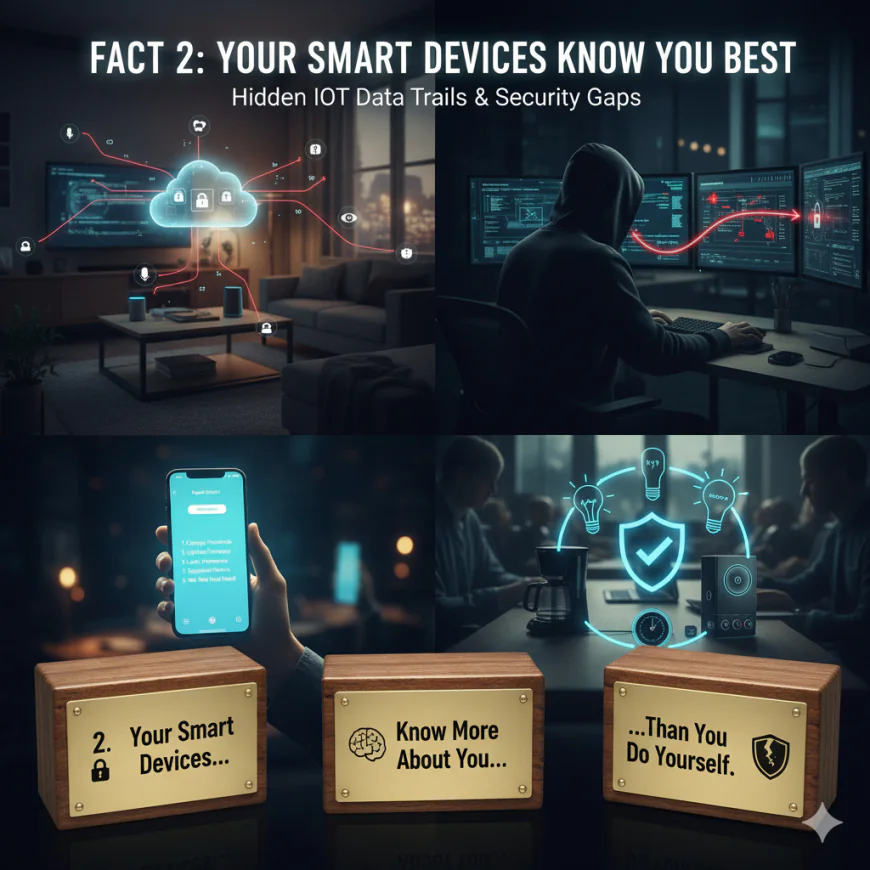
Everywhere you turn in your home, there are already smart devices like TVs, fitness bands, and voice assistants operating under the radar of your privacy. Certainly, the more comfortable the lifestyle, the higher the hidden cost the less privacy.
So, imagine each one of the Internet of Things (IoT) devices constantly harvesting, sending, and sometimes even keeping huge amounts of data about you. What is even more alarming is that most people are not aware of how in-depth and continuous this data-gathering process is.
The Hidden Data Trails
For instance, consider your fitness watch. It is not only a dpthing to record your steps but also a sensor to monitor heart, sleep, and location, and yet even an activity pattern detector. If the watch's and smartphone's data are cross-referenced their user can be found out when he/she wakes up, where he/she goes, and how much stress he/she experiences on certain days.
In the same way, smart speakers do not only listen to voice commands but also record and probably even store audio clips occasionally on cloud servers to "enhance performance." Most companies assert that the data is anonymous; however, studies have demonstrated that anonymized metadata can still be reverse-engineered to trace back to the original user.
The IoT Security Gap
What makes such data gathering even more hazardous is the fact that IoT devices do not come with strong security as a prerequisite. They often end up being sold with easy-to-guess passwords, outdated software, and no security whatsoever. This inability to implement strong security makes them very attractive to hackers who look for such weak spots to spy, steal data, or even get access to the network.
In a notorious incident, over a casino's smart thermostat in a fish tank, hackers were able to enter the building. This tiny device, connected to the Internet, allowed access to the casino's database containing the names of the richest clients. What happened here is just a perfect demonstration of why "smart" sometimes does not equal "secure."
Regaining Control Over Your Data
What are your options, then?
- Immediately, after getting any IoT device, change the default passwords.
- Regularly apply firmware updates to eliminate security loopholes.
- Restrict permissions for the device and turn off data gathering and features that you do not need.
- If it's possible, keep IoT devices on a separate network in your home.
Most importantly, only get the devices that you actually need and that are necessary for you. The less you own, the less your digital footprint is.
This brings us to the second point: the greatest vulnerability of your data could be in your thermostat or light bulb instead of your phone or computer.
3. Cybersecurity Is Not Only a Matter of Technology but Also Resilience
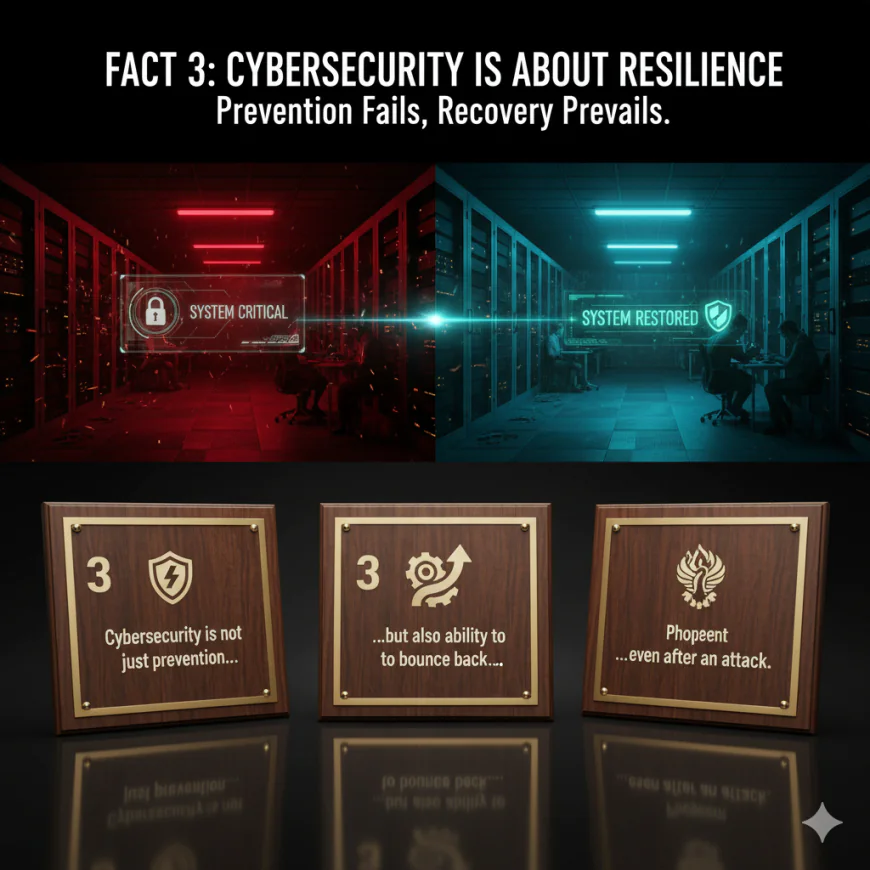
A lot of people think that cybersecurity ends with installing antivirus programs or firewalls. Actually, technology is just one part of a much larger picture. Real cybersecurity is about resilience being able to recover, adapt, and continue working even when attacked.
The Importance of Resilience
In the present era of digital interactions, data breaches are unavoidable. Even if the security measures are up to the highest standard, the attackers will eventually find a way in. What is next will determine whether there will be chaos or control.
Resilient companies have robust data backup systems, well-documented incident response plans, and open communication lines. In addition to teaching employees how to prevent attacks, they also teach them how to detect and respond to them quickly.
One can recall the instance of Maersk, the global shipping company that was hit by a massive ransomware attack in 2017. The attackers managed to disable thousands of the company's servers, but still, it was able to resume operations thanks to the only offline backup that was kept in an office in Ghana. The company lost billions due to ransomware, and this resilience strategy was a major factor in minimizing that loss.
The Principle of Assume Breach
Current cybersecurity frameworks basically have an "assume breach" attitude where intrusions are taken as a given and preparations made accordingly. This mentality changes the whole prevention scenario to a quicker containment and recovery.
Among the resilience's key aspects are:
- Data backup and recovery: Stores different encrypted copies of the critical data in various places.
- Incident response plans: The procedures stipulate the roles and responses during a cyber event.
- Zero trust architecture: A model that regards no device, user, or connection as implicitly trustworthy.
- Business continuity planning: Making sure that the business can still run, even when there are interruptions.
Cyber Resilience for Everyday Users
Cyber resilience is not only done by large organizations. Individuals can utilize the same concept at the personal level.
- Copy your files to cloud storage and to a hard drive that is not connected to the Internet.
- Make sure all software and the operating system are up to date with the latest security patches.
- Multi-factor authentication should be used to protect accounts.
- Bank transactions and online activities should be monitored regularly.
- Look out for and learn to recognize early signs of compromise.
To put it in a nutshell cybersecurity prevents you from being attacked; cyber resilience guarantees that when you are attacked, you bounce back quicker than the attacker expects.
And that’s the third fact you didn’t know you needed, cybersecurity’s real objective is not just prevention, but recovery.
An overlooked truth: security is a habit that must be practiced continuously
It becomes evident that cybersecurity is a very human, dynamic, and continuous process when one looks at the three facts from a distance.
Technology will never cease to change, and so will the attackers; however, the combination of awareness, caution, and resilience will be able to outlive the technological advancements in the form of malware or hackers' campaigns.
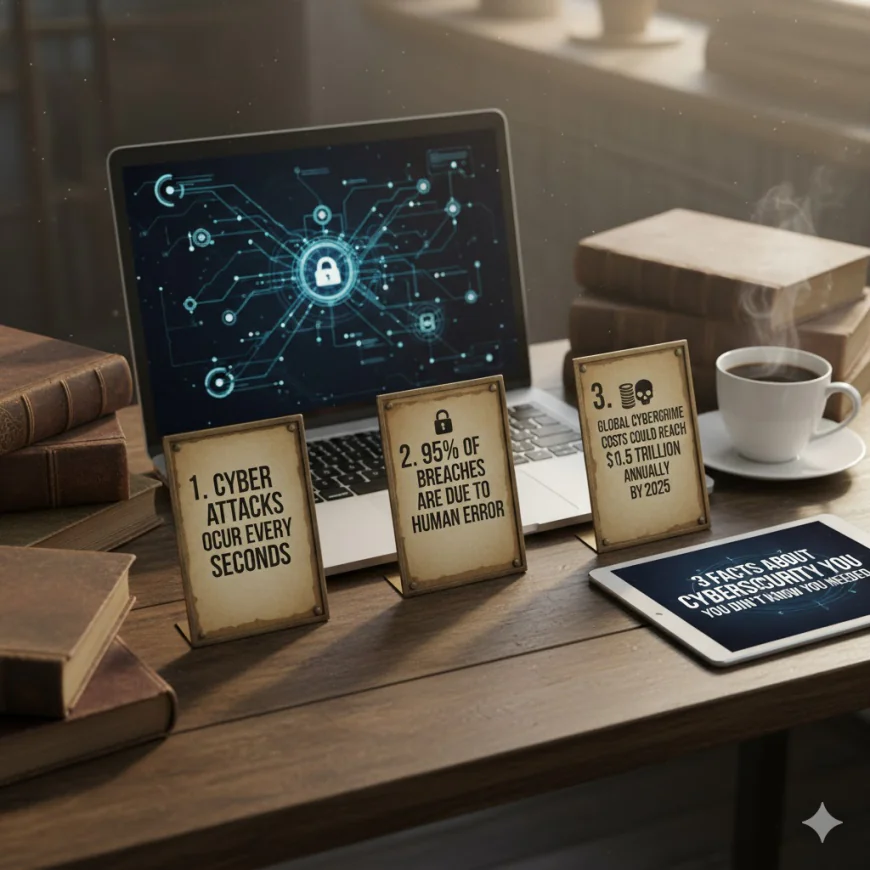
Let’s go through the three facts again that you probably did not know you needed:
- Human, not technical, is the greatest cyber risk.
- Your smart devices could be unwittingly disclosing more data than you realize.
- Cybersecurity involves not only defense but also resilience.
The three of them together change our perception of cybersecurity. It is not a checklist, software, or one-time setup; it is a mindset. The more we incorporate security into our daily decisions, the safer our digital lives are.
In the present time when data is considered the new gold and privacy the new luxury, being secure demands not only caution but also curiosity. Thus, maintain your learning, keep on questioning, and do not underestimate the impact of awareness, since the next cyberattack could be a test not for your firewall but for your judgment.