














Miss This Shift in Cybersecurity and You’ll Fall Behind
Stay ahead of evolving threats in cybersecurity. Discover why intelligence-driven defense, AI, and Zero Trust are reshaping security and what you risk by missing this shift.


The cybersecurity arena is not a stationary one; instead, it is a constantly evolving battlefield. The very strategies that used to secure data are now being rendered irrelevant at a rapid pace as digital systems go through their changes and the AI revolution redefines the ways of operation for both the defenders and the attackers.
What a significant transformation is taking place at the moment in cybersecurity! It is one that will determine the fate of the organizations in terms of their security or even worse, being left behind. It is not merely a technological upgrade but an entire rethinking of the detection, defense, and adaptation of threats. The consequence of not catching the shift would be losing not only data but also trust, reputation, and long-term resilience.
The Old Security Mindset Is No Longer Effective
The focus of cybersecurity for years has been on the perimeter. Firewalls were placed, secure networks were managed, and the assumption was that the ultimate goal was to keep the attackers out. That model was valid in times when the systems were local and predictable.
However, the scenario has changed. Cloud computing, mobile devices, IoT ecosystems, and remote work have done away with those old boundaries. Data is no longer sitting idle in one location; rather, it is continuously flowing between APIs, containers, and cloud services. Attackers have managed to keep pace with the majority of networks.
The traditional static defenses—signature-based antivirus, conventional intrusion detection systems, and periodic patch cycles are not in a position to cope with the fast evolving, AI-driven attacks that can change overnight. Security, in present times, needs to be dynamic, continuous, and completely data-driven.
The Shift: From Reactive Defense to Predictive Intelligence
The greatest change in cybersecurity today is the transition from reactive defense to predictive intelligence. In the previous model, the defenders acted when they were hit. However, that is losing strategy nowadays.
Predictive cybersecurity is based on three pillars: automation, analytics, and anticipation. Organizations are not just reacting to an incident but employing machine learning, anomaly detection, and behavioral analytics to discover risks while they are still forming.
It is not a matter of how to fix it anymore but rather how to prevent it before it even starts.
The primary changes that are driving these movements are:
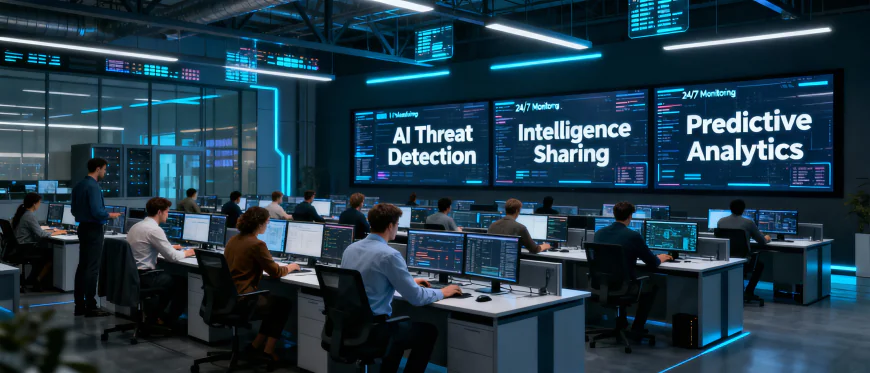
- AI-based threat detection: The systems are learning through global threat behaviors and breaching detection in real-time.
- 24/7 Monitoring: The security team does not just conduct audits at intervals but also monitors the behavioral patterns continuously.
- Intelligence sharing: Threat data is being shared among the organizations and across the borders which ultimately results in a collective defensive shield.
- This change in strategy is a reflection of the modern-day cyber scenario: having a static security system is no longer an option. The only viable defense is the one that adapts to the attackers' moves faster than they can attack.
How AI Is Rewriting the Rules
The use of artificial intelligence in cybersecurity has been gigantic and revolutionary in all ways. It has altered both the offensive and defensive sides of the game, resulting in a new cyber arms race.
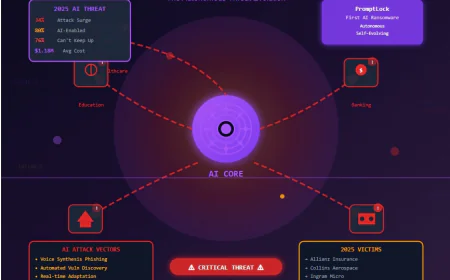
Above all, the attackers have increased their efficiency and effectiveness by using AI to the full. They have employed AI to automate the scanning of vulnerabilities, produce the codes, and write very personalized phishing content that closely imitates the writing styles of actual people. Generative tools are used widely for the production of deepfakes, fake identities, and fake voices that are very realistic. There are even ransomware kits that can determine their targets automatically based on the digital footprint of the intended victim.
In contrast, the defenders are finally realizing the full potential of AI no longer just a tool, but a partner with them. The machine learning-backed security platforms are now capable of:
- Using predictive scoring to indicate suspicious files or unusual logins.
- Detecting insider threats through behavior baseline mapping.
- Employing incident response automation via security orchestration.
- Connecting signals across cloud environments within seconds.
The trend towards AI-based cybersecurity is not that humans get eliminated in the process they are just getting their insights quickened by computational power. The most effective solutions deploy AI's accuracy alongside human’s discretion where its analysts deal with the ambiguity of context and motives in the complex attack chains.
Nevertheless, this also raises the bar on vigilance. Incompetently configured or unfairly trained models might reduce detection range, whereas attackers might use the “poisoning” method on the AI datasets to disrupt the defense systems. The companies that will thrive will be those with the ability to merge AI's advantages and disciplined human-watching.
The issue of Cloud and API Security
The migration to cloud computing has brought speed, scaling, and agility—the downside has also been the responsibility of security that majorly traditional tools could no longer keep monitoring.
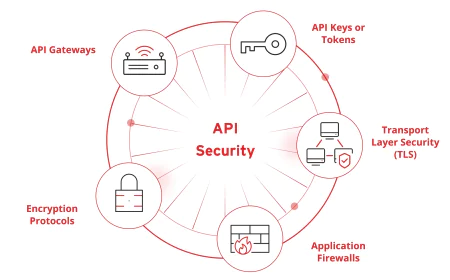
The latest applications, for instance, structure their components around microservices and APIs across which very sensitive data flows. Therefore, every API endpoint that is publicly available is a potential opening for an attack. A wrong setting in cloud storage or the opening up of a password can bring millions of records to the outside world in no time.
What’s shifting now is the defenders’ way of dealing with this convoluted situation. The new cybersecurity trend is focusing on identity, access, and visibility across the cloud layers. Security staff are putting into practice the following measures:
- Zero Trust Architecture (ZTA): Do not trust anybody by default, and keep verifying each request.
- Cloud workload protection platforms (CWPPs): Ensure safety of containers, serverless functions, and virtual machines no matter the environment.
- Posture management tools (CSPM): Have real-time detection of configuration drift and compliance enforcement done automatically.
Cloud security has gone from being merely a side function to now being the pillar of modern protection. Failure to recognize this shift means no longer being able to track your data movement and who is accessing it.
Why Tool Overload Is Hampering Cyber Defense
Ridiculously, the reliance on tools has become one of the most significant hurdles that cybersecurity has to overcome. Many businesses think that they will get better protection when they purchase more software. And, you know what? As a result, a lot of uncoordinated dashboards, conflicting alerts, and huge gaps between detection and response.
The security integration instead encourages and the cybersecurity shift discourages tools sprawl that was siliconed in.
Moreover, the security managers are migrating to XDR-like platforms and the unified infrastructures extended detection and response (XDR) that integrate, derive meaning from, and blanket every layer of data network, endpoint, cloud, and application.
The concept is straightforward, correlation is more effective than collection. Only when the dots between alerts that seem unrelated are connected and the real scene is put in context, do insights become significant.
On the other hand, disintegrated system operators may find themselves facing delayed responses, invisible areas, and resources down the drain.
People Still Matter: Human Error and Behavioral Risk
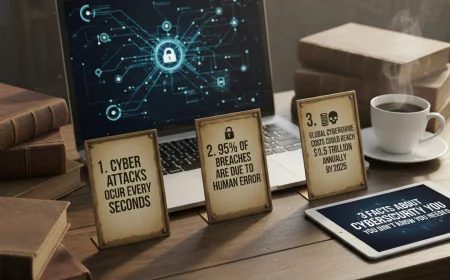
Technology may evolve, but people remain the weakest link in the security chain. Despite improvements in AI detection, over 80% of breaches still involve some form of human error.
Employees often fall for phishing scams, reuse passwords, share too much data online, or install unauthorized software. Interestingly, many organizations still treat security awareness training as a task to complete once a year and then forget about it.
That approach no longer works. Modern cybersecurity focuses on ongoing, behavior-based education programs that simulate real threats and adjust to how individuals learn.
Gamified training, phishing simulations, and real-time feedback help employees respond instinctively to changing social engineering tactics. Cybersecurity culture is now a daily practice, not a policy document.

Zero Trust: From Buzzword to Backbone
For years, "Zero Trust" had sounded like a buzzword, but it's now the operational foundation of modern cybersecurity.
Zero Trust presumes every user, device, or connection might be compromised continuously and, thus, constantly verifies access upon each interaction. The framework centers around these premises:
- Principle of Least Privilege: Provide users with least access.
- Micro-segmentation: Limit movements within the network even after authentication.
- Identity as the new perimeter-protect every access point, not just the boundary of the network.
- Continuous verification: Assess behavior, location, and device health in real time.
Zero Trust becomes non-negotiable as an organization increasingly adopts hybrid work and cloud ecosystems. It directly addresses lateral movements, abuse of privilege accounts, and credential theft three of the most common pathways for major breaches.
Missing this shift is like guarding the front gate while leaving every window open.
Resilience Is the New Security Metric
Historically, organizations have focused on prevention, measuring success based on the number of attacks thwarted. The modern reality, however, is different: every system can and eventually will be breached.
The new focus is resiliency, how quickly an organization can detect, contain, and recover from incidents. It's no longer enough to prevent; you have to be able to bounce back.
Cyber resilience is obtained through:
- Real-time data backup and automated failover.
- Regularly tested incident response playbooks.
- Communication plans that retain stakeholders' confidence through crises.
- Improve future response with post-incident analytics.
Organizations with this mindset can turn security into a continuing cycle of improvement rather than a wall waiting to crack.
The Evolving Skill Set of Cyber Professionals
The shortage of cybersecurity talent is nothing new; what is alarming now, however, is the skills gap between what's being taught and what's truly needed.
It's a modern threat environment that requires hybrid professionals-people who understand coding, automation, and data analytics as fluently as they manage firewalls or compliance reports.
In-demand skills now include:
- Threat intelligence and hunting: Actively searching for hidden risks before detection systems trigger.
- Security automation and SOAR: Reduce response times by streamlining workflows.
- Cloud Native Security: AWS, Azure, and Multicloud Defense in Detail
- DevSecOps practices: Security embedded early in the development pipeline.
- AI and ML Understanding: Building models for anomaly detection and predictive analysis. It's not only a technological shift-it's an educational one, too. Professionals must learn continuously to remain relevant, much as attackers constantly adapt their own tools and tactics.
The Cost of Missing the Shift
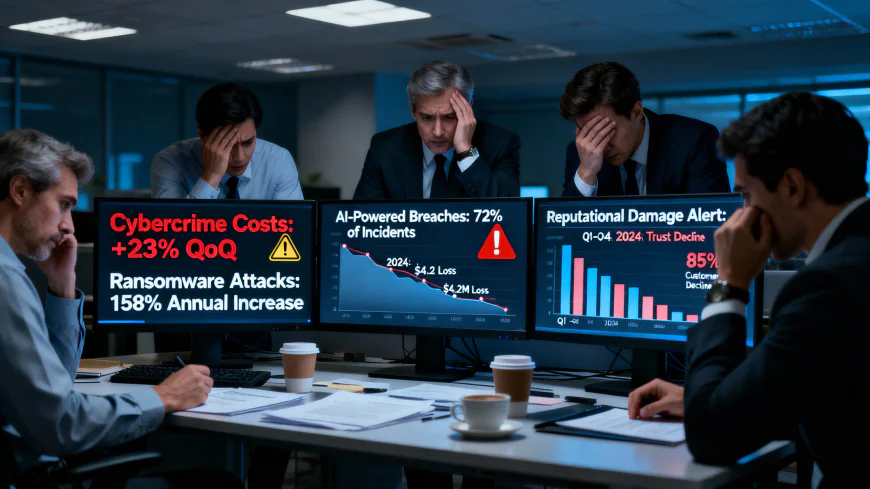
In fact, organizations that ignore this change won't just fall behind but risk operational collapse. Global damage from cybercrime is projected to reach a whopping $13 trillion by 2030, with ransomware and AI-powered attacks leading the charge.
The cost of inaction is not just money. It includes downtime, legal liabilities, regulatory penalties, and reputational loss: clients and investors are now judging a company's cybersecurity maturity as a key part of trust.
Falling behind in security innovation translates to falling behind in business, plain and simple.
The Way Forward
This is the inflection point. Intelligence, automation, and resilience are now reshaping the cybersecurity world.
Yesterday's defenses were static; tomorrow's must be predictive. Security is no longer a department; it is a philosophy that runs through every layer of an organization's operations.
To stay ahead:
- Implement intelligence-driven systems instead of using old tools.
- Build human resilience alongside technical defenses.
- Adopt a Zero Trust approach by default.
- Invest in AI and automation to speed up detection.
- Educate teams continuously, since threats evolve daily.
The organizations making these moves will not only survive the next wave of attacks but also will emerge as leaders in digital trust. Final Thought
The shift in cybersecurity isn’t on the horizon, it's already here. AI-powered crime, expanding attack surfaces, and adaptive threats will continue to change the rules faster than ever. But missing this shift is no longer an option. It's the difference between resilience and ruin. It is only those who adapt now that the future belongs to.