







Why People Overshare-and How Hackers Use It
Discover why people overshare on social media and how hackers exploit it. Learn the psychology behind oversharing, real-world breach examples, and actionable protection strategies.

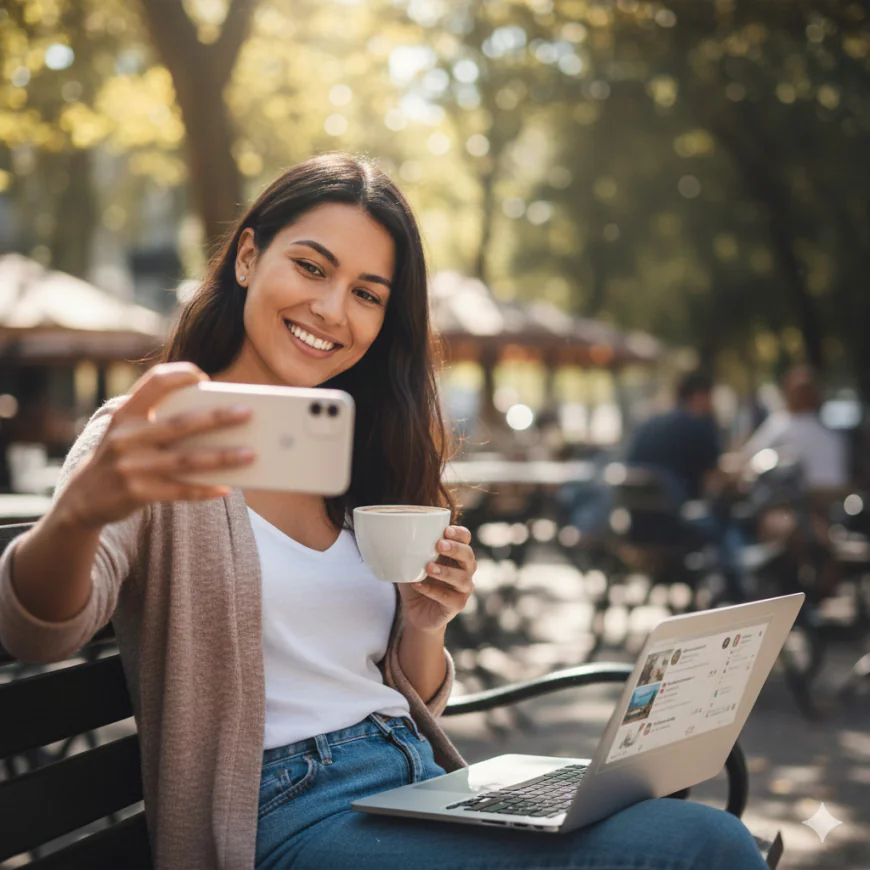
In today's hyperconnected world, social media has transformed how we communicate, connect, and share our lives. A photo from your vacation, details about your weekend plans, or even a quick check-in at your favorite coffee shop can feel completely harmless. But what if we told you that every post, every location tag, and every personal detail you share is being catalogued by someone with far more malicious intentions than reconnecting with old friends?
The uncomfortable truth is that oversharing on social media has become one of the most dangerous vulnerabilities in modern cybersecurity. While the psychology behind why we overshare is rooted in real human needs, the consequences can be devastating. Cybercriminals have learned to turn our natural impulse to share against us, turning our social media presence into a goldmine of information they can use to commit identity theft, phishing attacks, and worse.
The Psychology Behind Oversharing
But before discussing how hackers take advantage of oversharing, it's important to understand why we do it in the first place. Here are three main drivers of over-sharing as revealed by research.
The first big factor is the Privacy Calculus Effect. Essentially, persons make a mental balancing of the potential benefits against the potential risks when deciding whether to share personal information online-but tend to get the math wrong. Various studies prove that users of social media are far more focused on the positive outcomes of sharing-building social connections, receiving validation in the form of likes and comments-than on the very real dangers. This results in a sort of mental blind spot in which persons convince themselves that the benefits outweigh security concerns.
Psychological Distress is another powerful motivator. Research has established clear links between oversharing and anxiety, attention-seeking behavior, and social media addiction. If people feel lonely, stressed, or in emotional turmoil, social media provides an outlet. Via likes and supportive comments, this can create a dopamine-driven feedback loop that gives a sensation of being connected and helped, even when it is mostly superficial. The problem is that in emotionally vulnerable moments, our judgment as to what to share becomes severely compromised.
But perhaps the most insidious driver of them all is the Online Disinhibition Effect. When we're behind a screen, separated from our audience by pixels and distance, we feel emboldened to share things we'd never reveal face-to-face. The anonymity and lack of immediate social consequences make us reckless. We forget that our audience is far larger than our intended friends-it includes strangers, bots, and yes, cybercriminals actively monitoring our posts for information they might be able to leverage.
How Hackers Weaponize Your Personal Data

It's interesting to learn about the psychology that makes people overshare online, but the real danger comes in when cybercriminals take advantage of this information. Sharing personal information allows attackers to build profiles-a fundamental tactic in social engineering. An attacker then uses these profiles to spear phish, an advanced and highly personalized phishing technique. Whereas bulk phishing only sees a 12-14% open rate, tailored spear phishing messages achieve open rates of 50%, simply because the attacker uses specifics from your public social media: your name, interests, workplace, and even family connections. For instance, a hacker may impersonate your IT staff and make mention of some project mentioned on your LinkedIn profile or mention details about where you went on your last vacation, which you shared on their messaging apps; they'd work such elements into the message to make it sound quite legitimate and convincing.
The repercussions go much further than being tricked by an email. Identity theft and account compromise are major considerations. Each time you give out your full name, birthday, telephone number, address, pet's name, or high school, you are giving hackers the answers to common security questions. You're putting your digital identity at risk-the hackers can reset passwords, access your active accounts, or open new fictitious accounts in your name, after which financial losses can be incurred, along with the exhausting process of restoring one's reputation across various institutions and platforms.
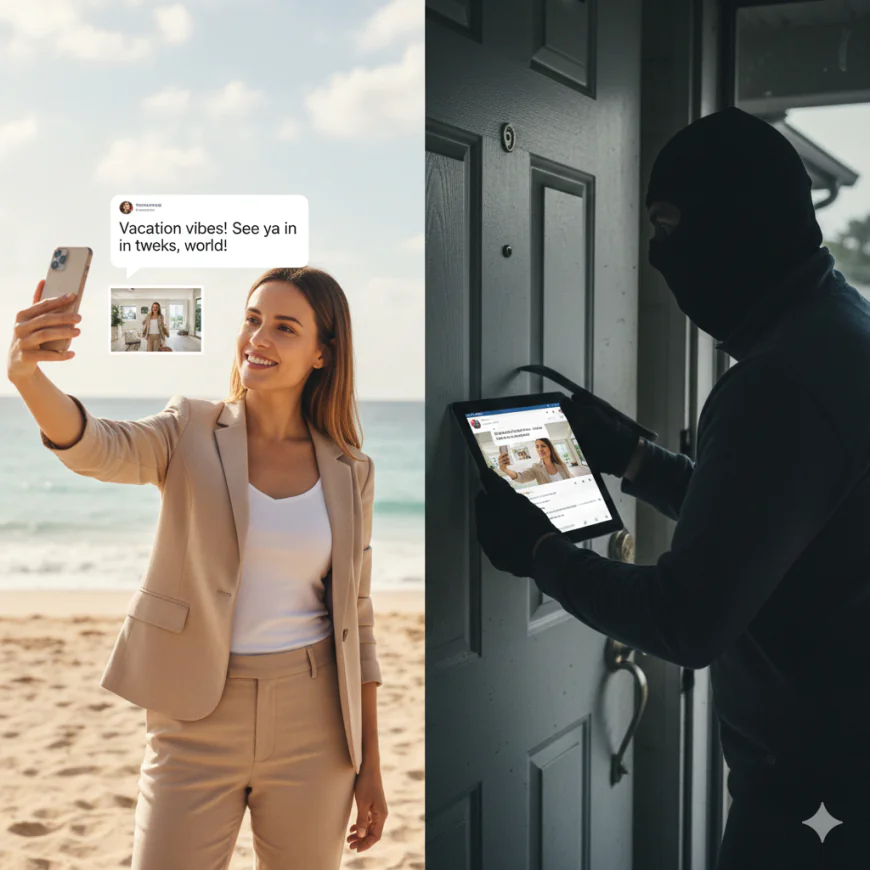
Physical security is at risk as well. Posting photos of a vacation in real time, or checking in somewhere, broadcasts your absence, inviting burglars to target your home, or reveals your routines to would-be stalkers. If someone knows where you work out, your office hours, and your usual cafe, then they have the information they need to plot an unwanted encounter or physical assault.
Finally, oversharing enables credential guessing and password recovery attacks. The bad guys scrape your social posts to create lists of potential passwords or correctly answer password recover questions. The 2022 Verizon Data Breach Investigation Report found that 43% of spear phishing campaigns resulted in stolen login. With your credentials the attackers often gain access is not just to one account but to your entire digital world.
Real World Examples of Oversharing Going Wrong
The dangers of oversharing is not merely theoretical. Recent breaches, especially those involving big names have proved. In May 2025, Coinbase faced one of the worst security incidents ever where the corrupt overseas support staff were bribed to sell customer data which included the full names, birthdates, email addresses, and partial social security numbers. Some of the criminals then used the leaked personal data to carry out very accurate social engineering attacks against those customers by doing a targeted selection of them.
A comparable narrative has been narrated by the LexisNexis breach in December 2024. By means of pretext and the manipulation technique where the attacker create a seemingly trust cover story to win over and get access, the hacker employed social engineering to dig into GitHub repos. The single event led to the exposure of personal data of over 3,64,000 people including sensitive information.
What is important to note, however, is that the breaches were essentially not purely technical in nature. They succeeded only because excessive personal disclosure in public spaces made targets vulnerable to being manipulated and socially engineered. Where attackers are able to gain access to the biographical details that people voluntarily share online they have the leverage they need to orchestrate even the most sophisticated of attacks through impersonation, credential recovery or through psychological manipulation. A combination of leaked data and publicly available oversharing creates the perfect storm for cybercriminals.
How to Protect Yourself Without Abandoning Social Media
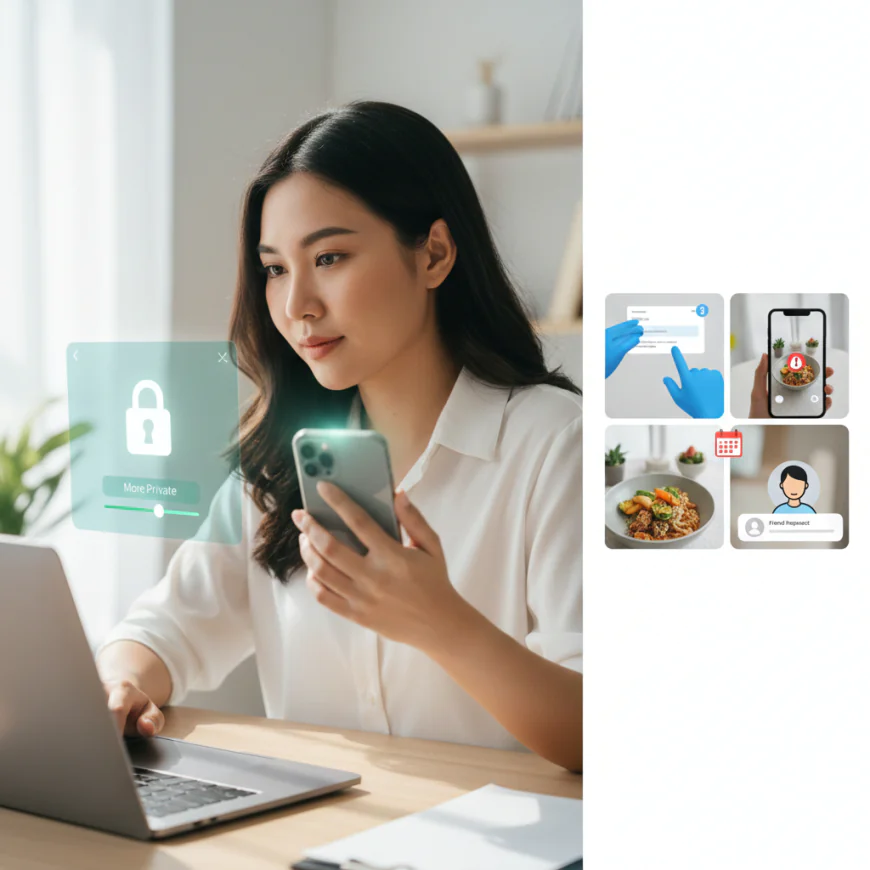
Not completely abstention from all the social media but being more strategic and thoughtful about what you share.
Reinforce your privacy settings on all the platforms you are using. Every website, except a few allows you to set who can read your post see your friend list, and show your personal informations. Make these settings as restrictive as possible and regularly revisit them since platforms quite regularly change their default settings.
Delay sensitive posts especially photos that are vacation-related. Never post that you are traveling in real time. Wait until you get home to post any of your vacation highlights. The same would go for major purchases or big ticket items that may indicate that you have property of value to thieves.
Really think before you share personal information. It may seem like benign information, but even things such as what your pet is named or where you like to go eat, or where you went to school may become security questions. Ask yourself before you post anything, Could someone use this to guess my password, impersonate me, or harm me?
Be careful with viral quizzes/surveys: those fun What's your Game of Thrones character? or What's your superhero name? quizzes usually ask for personal information in the pretense of entertainment. This information gets harvested for resale to data brokers or is used by the attackers to create a full profile on you.
Vet friend requests: Attackers will set up fake profiles similar to your friends and colleagues, then request access to your information. When someone sends you a request and you don't know who they are, use another channel to contact them first before accepting.
Report suspicious emails or messaging. Those that ask for personal and financial information via email or messaging even when they appear to come from someone you trust or a platform you have used before should first be verified through official channels. Hover over URLs in order to see where they really point to before clicking them.
The Bottom Line
Oversharing on social media not only affects privacy but also is a cybersecurity crisis. Every post you make increases the digital footprint that hackers are looking for and trying to exploit. The reason for sharing is very human instinct: we need connection, recognition, and a sense of belonging. Knowing how attackers turn the information against you is the first and most important step in securing yourself. It all boils down to finding a middle ground. You can still live your online life without compromising security. Consider your sharing, privacy settings and make sure to post only when ready. Consequently, you'll be able to form genuine relationships and significantly cut down on your risk of getting targeted by cyber criminals. Your security deserves that little extra time before clicking on post.