














Supply Chain Attacks: Why Trusting Your Vendors Is Your Greatest Security Risk
Master supply chain attack vectors through real-world case studies of SolarWinds (18,000 victims), Kaseya (800+ businesses), and Nobelium. Learn detection, prevention, and zero-trust strategies for securing your vendor ecosystem in 2025.


The Invisible Threat: When Vendor Trust Becomes Your Vulnerability
On December 13, 2020, the security world experienced a moment of crystalline clarity. A breach was discovered that would reshape how organizations thought about cybersecurity forever. It wasn't the size of the attack that shocked the industry. It wasn't the sophistication of the exploit. It was the elegance of the deception.
SolarWinds, a company trusted by over 300,000 organizations worldwide, had been compromised. Attackers had infiltrated their software development environment and injected malicious code directly into legitimate software updates. Over 18,000 organizations—including the U.S. Department of Homeland Security, the Treasury Department, and countless Fortune 500 companies—unknowingly installed updates containing a sophisticated backdoor called Sunburst.
The attack cost victims an average of 12 million dollars each. Total estimated damage exceeded 200 billion dollars. The fallout from a single compromised vendor affected more organizations than any single cyberattack before it.
This is the supply chain attack. This is the new frontier of cybersecurity threats.
Understanding Supply Chain Attacks: Exploiting Trust as a Weapon
A supply chain attack occurs when an attacker compromises one or more elements of an organization's supply chain—software providers, hardware manufacturers, cloud service vendors, or logistics partners—then leverages that compromise to access the ultimate targets.
Unlike traditional attacks that directly target the destination victim, supply chain attacks work sideways through trusted intermediaries. Attackers compromise the weakest link in the chain, then use that leverage to cascade the compromise downstream to thousands of secondary victims.
The brilliance of this approach is fundamental. You cannot adequately defend against attacks launched through vendors you depend on. Organizations spend enormous resources securing their networks, patching systems, and implementing access controls. But if the software they trust is malicious at its source, all those defenses become meaningless.
Gartner predicts that by 2025, supply chain attacks will account for 45 percent of all cyberattacks against organizations. By 2030, supply chain attacks are expected to become the most common attack vector globally.
Modern software development has made supply chains simultaneously more powerful and more vulnerable. Applications today rely on hundreds or thousands of third-party dependencies, each representing a potential compromise vector. A single malicious dependency can affect millions of developers and billions of users globally.
The SolarWinds Catastrophe: A Six-Month Infiltration
The SolarWinds attack unfolded over six months, during which attackers systematically positioned themselves for maximum impact.
In September 2019, attackers gained unauthorized access to SolarWinds' network. For months, they conducted reconnaissance, identified critical systems, and planned their next moves. In October 2019, they began testing code injection techniques within Orion, SolarWinds' flagship IT management platform used by government agencies and major corporations worldwide.
In early 2020, the attackers successfully injected malicious code called Sunburst into Orion's codebase. The code was sophisticated. It included logic to identify high-value targets and lay dormant against low-value ones. It communicated with command-and-control servers using legitimate-looking domain names registered specifically for this purpose.
On March 26, 2020, SolarWinds released Orion updates containing the malicious code. The updates appeared legitimate. They were signed with SolarWinds' genuine certificates. Customers downloaded them from legitimate servers. Their antivirus software, configured to trust SolarWinds as a known vendor, waved them through without inspection.
By the time the breach was discovered in December 2020, nine months had passed. Attackers had unrestricted access to countless government agencies and corporate networks. They had exfiltrated state secrets, stolen intellectual property, and established persistent backdoors that would allow access for years.
The investigation revealed something chilling. The attackers may have been preparing this attack since 2019. They may have had access to SolarWinds' systems even before the initial compromise. This wasn't a smash-and-grab attack. This was a surgical insertion of a backdoor into the world's largest IT management platform.
The Kaseya Precedent: When Supply Chain Becomes Active Weapon
Eight months after SolarWinds' disclosure, a similar attack unfolded against Kaseya, a company providing remote management software for managed service providers (MSPs).
In July 2021, attackers exploiting zero-day vulnerabilities in Kaseya's Virtual System Administrator (VSA) deployed REvil ransomware across compromised MSPs and their downstream customers. The attack chain worked like this:
Kaseya's VSA contains an authentication bypass vulnerability that allowed unauthenticated access to the web interface. The attackers leveraged this flaw to gain administrative access. They then exploited SQL injection vulnerabilities to upload malicious payloads directly into VSA systems. When MSPs used VSA to manage their clients' systems, the ransomware propagated across the entire ecosystem.
The Dutch Institute of Vulnerability Disclosure had warned Kaseya about seven vulnerabilities in April 2021. Kaseya patched four of them before July. The remaining three were exploited in the actual attack.
Between 60 and 80 MSPs directly using Kaseya VSA were compromised. But because MSPs serve hundreds or thousands of downstream customers, the blast radius was enormous. Between 800 and 1,500 businesses were affected. Swedish grocery chain Coop had to close hundreds of storefronts when their cash registers stopped functioning. Railways, pharmacy chains, and governmental agencies experienced disruptions. Schools in New Zealand closed due to ransomware impacts.
The Kaseya attack demonstrated that supply chain compromise isn't always about sophisticated espionage. It can be about direct economic extortion on a massive scale.
The Evolving Threat: From Code Injection to Self-Propagating Worms
Supply chain attacks continue to evolve. Recent incidents demonstrate increasingly sophisticated techniques.
The Nobelium attacks, attributed to Russian threat actors, targeted resellers of legitimate software vendors. Rather than exploiting technical vulnerabilities, they used social engineering and credential theft to gain access, then used that access to compromise downstream customers.
In 2025, the Shai-Hulud supply chain attack represented a new threat: the first successful self-propagating npm worm. Attackers seeded malicious versions of popular open-source packages on npm (Node Package Manager). These packages contained post-install scripts that automatically harvested sensitive data from developers' environments, extracted npm authentication tokens, and used those tokens to automatically push malicious versions of additional packages.
This attack created a chain reaction. Developers downloading the initially infected package would unknowingly be infected with malware that would then attack and compromise other packages. A single compromised library could trigger a cascade of automated infections across the entire open-source ecosystem.
The 2025 Bybit cryptocurrency hack, stealing 1.5 billion dollars, was caused by a supply chain attack in wallet software that only executed under specific conditions. The malicious code lay dormant until the victim wallet was actually used, making detection extraordinarily difficult.
Supply chain attacks are becoming more automated, more conditional, and more difficult to detect.
Detection: Finding the Needle in the Haystack
Detecting supply chain attacks requires multiple overlapping strategies because the attacks occur in legitimate software from trusted vendors.
Traditional endpoint detection fails because the malicious code is legitimate from a cryptographic perspective. It's signed by valid certificates from the vendor. It's distributed through legitimate channels. Antivirus signatures don't help because the attack is custom-coded for each campaign.
The detection must occur at multiple layers.
Network monitoring can identify abnormal communication patterns to suspicious external servers. The Sunburst malware in SolarWinds used legitimate-looking domain names, but analysts identified unusual DNS queries and HTTP patterns that indicated compromise.
Behavioral analysis watches for software performing unexpected actions. If SolarWinds Orion suddenly attempts to modify domain trust relationships or export security certificates, that's suspicious behavior regardless of whether the software itself is legitimate.
Software Bill of Materials (SBOM) implementation provides visibility into all components, dependencies, and supply chain elements. Organizations implementing comprehensive SBOMs can identify which systems are affected by a supply chain attack more rapidly than those without this visibility.
Anomaly detection algorithms compare normal behavior patterns against current behavior. If Orion suddenly generates unusual network traffic or attempts privileged operations it doesn't normally perform, detection systems should alert.
The challenge is that attackers now specifically design malware to blend in with normal vendor behavior. Modern supply chain malware includes logic to identify high-value targets and only activate against specific conditions, remaining invisible against lower-value targets.
Prevention: Building Zero-Trust Supply Chains
Organizations responding to SolarWinds have increasingly adopted zero-trust architecture for supply chain security. This model treats all software, including from trusted vendors, as potentially compromised until verified.
Zero-trust vendor security involves several practices:
Continuous monitoring of vendor software behavior. Rather than trusting updates based on vendor reputation, organizations monitor software execution, network communications, and system modifications in real-time. Any unexpected behavior triggers immediate investigation.
Principle of least privilege for vendor software. SolarWinds Orion doesn't need to export security certificates or modify domain trust relationships. Restricting software to only necessary permissions constrains potential damage from compromised updates.
Network segmentation isolates vendor-managed systems from critical assets. If SolarWinds Orion is compromised, network segmentation prevents the compromise from spreading to domain controllers, email servers, or other critical systems.
Regular software integrity verification checks that installed software matches expected configurations. Hash verification confirms updates haven't been modified.
Isolated testing environments allow organizations to test updates in quarantine before deploying to production. Updates are monitored for suspicious behavior in these isolated environments before rollout.
Dependency scanning and software composition analysis tools identify vulnerable or malicious dependencies before they enter production. Tools like SBOM analysis, software composition analysis, and vulnerability scanning provide visibility into supply chain dependencies.
The Supply Chain Defense Strategy
Organizations implementing effective supply chain defense use a multi-layered approach:
Vendor security assessment evaluates the security posture of critical vendors before and during partnerships. This includes security questionnaires, penetration testing, and regular audits of vendor security practices.
Incident response planning specifically addresses supply chain compromise scenarios. Organizations should have defined procedures for when a vendor is compromised, including communication protocols, escalation procedures, and recovery strategies.
Continuous monitoring and alerting on vendor software behavior provides early warning of compromise. Behavior baseline monitoring detects anomalies that might indicate malicious code injection.
Vulnerability management processes ensure rapid patching while allowing time for testing to identify poisoned updates. The balance between rapid patching and ensuring update safety is critical.
Threat intelligence subscriptions keep security teams informed about emerging supply chain threats. Early warnings about vulnerabilities in critical vendors allow proactive defense before public exploits emerge.
Collaborative information sharing through organizations like CISA, which coordinate whole-of-government response to supply chain threats, provides intelligence about emerging attacks and recommended defensive measures.
The Path Forward: Supply Chain Resilience in 2025
The SolarWinds attack happened nearly five years ago. Yet supply chain vulnerabilities remain prevalent because the fundamental problem hasn't been solved. Modern software development relies on hundreds of dependencies from different vendors with varying security postures. Attackers only need to compromise one weak link to affect millions of downstream users.
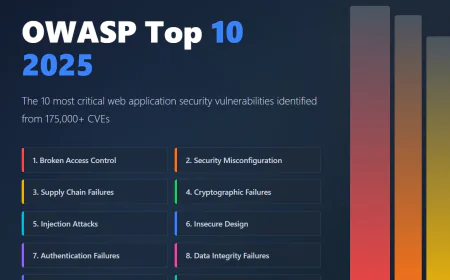
The solution involves systemic change in how software is developed, distributed, and verified. NIST guidelines, OWASP standards, and regulatory frameworks are increasingly mandating supply chain security practices. Executive orders now require critical infrastructure operators to implement specific supply chain security controls.
Organizations must accept that supply chain attacks are inevitable. The question isn't whether you'll face supply chain compromise but when and how you'll respond. Building resilience means assuming compromise will occur and designing systems that can detect, contain, and recover from compromised suppliers.
The vendor you trust today might be compromised tomorrow. Your security strategy must account for that possibility and implement defenses that work even when trust is violated.