











Navigating the Future of Cyber Security: Key Trends to Watch in 2026
Explore the top cyber security trends shaping 2026, from AI-driven threats to cloud security and zero trust frameworks, with actionable strategies for organizations to stay resilient. Learn how businesses can adapt and safeguard data in an ever-evolving digital landscape.


Driven by technical innovations, attacker complexity, and the exponential growth of linked devices globally, cyberattacks are changing at an unparalleled rate. Over 30,000 vulnerabilities were revealed just last year, which represented a 17% rise from earlier years and was a blatant indication of the growing cyber threats companies deal with every day. New attack vectors target endpoints, data flows, and cloud environments as remote work, cloud adoption, and digital transformation speed up, so companies have to remain ahead of the most recent cybersecurity trends.
This thorough reference examines the most important cybersecurity advancements changing the threat environment for 2026. This paper seeks to provide companies the knowledge needed to lower risk and strengthen themselves from knowing what fuels these trends to realistic mitigation plans. Across hybrid, cloud, and on-premises systems, defenses.
What Are Cyber Security Trends?
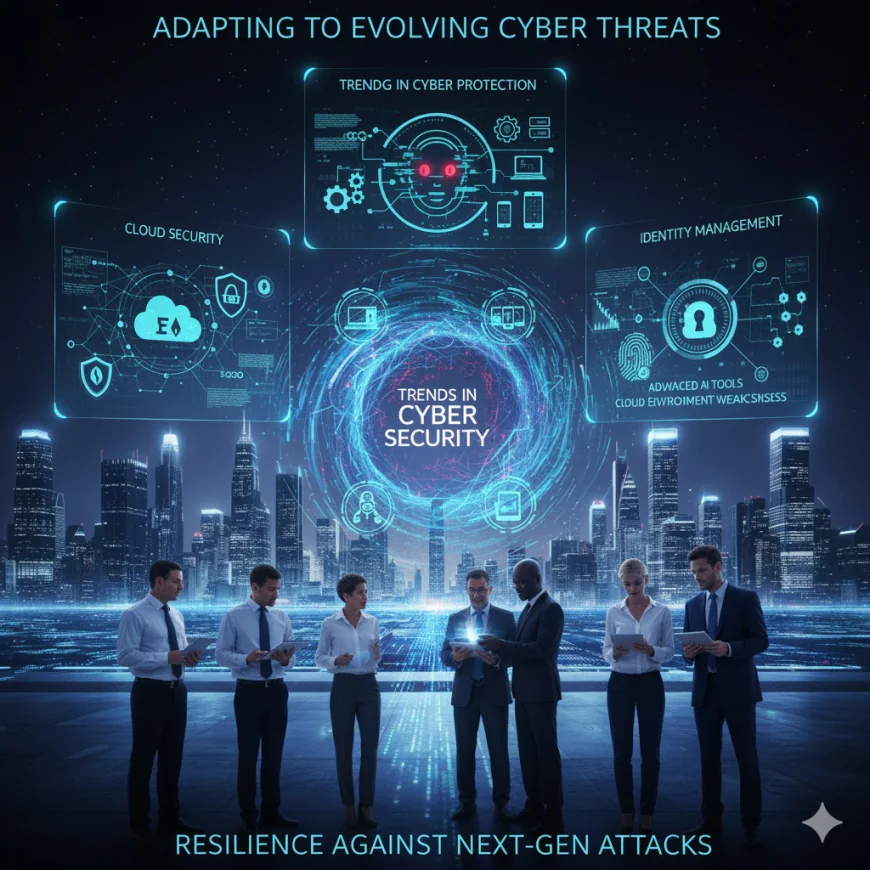
Patterns, methods, and newly discovered attack vectors that change in reaction to attacker inventiveness, technical advancement, and major worldwide events are trends in cyber security. They cover a range of techniques including supply chain invasion methods, social engineering techniques like deepfakes, and AI-driven malware. Understanding these trends helps businesses to actively adjust their security plans to guarantee resiliency against next strikes.
Keeping abreast of cyber security trends-especially in cloud security, endpoint protection, and identity management-becomes not just an operational requirement but also a strategic priority. Standard security measures sometimes fail as cyber enemies use advanced AI tools and exploit cloud environment weaknesses, therefore needing sophisticated, flexible protection systems.
The Critical Role of Monitoring Cyber Security Trends
Gartner says that worldwide IT expenditure rose to USD 5.1 trillion in 2024; eighty percent of CIOs are raising security budgets . This information emphasizes how important ongoing cyber security trend monitoring is for company survival.
Why Trends in Cyber Security Matter
Growing Attack Complexity: Usually circumventing conventional signature-based detection, multi-stage campaigns and fileless malware are among attack techniques becoming increasingly complex. Tracking these trends enables companies to implement behavioral analytics and zero-trust systems that early detect abnormalities, therefore lowering reaction time.
High-profile data breaches lower stakeholder confidence and invite legal repercussions; hence, protecting reputation and trust is crucial. Understanding of developing dangers enables businesses to avoid events and protect brand image.
Rules like PCI DSS, HIPAA, and GDPR demand rigorous data handling and security criteria, thereby ensuring legal and regulatory compliance. Observing cyber security trends guarantees compliance and helps to reduce punishments should ransomware's threat develop.
Addressing Remote Workforce Risks: The rise in remote work raises vulnerabilities pertaining to endpoint security, VPN integrity, and data exfiltration. Keeping up with developments like zero trust and endpoint security enables companies to put in place strong defenses.
Financial consequences and vulnerability management: Ransomware and data breaches result in multi-million-dollar losses not only in ransom payments but also in brand erosion and operational downtime. Continuous threat trend analysis helps one to invest more intelligently in security solutions.
One perfect attack surface is unpatched vulnerabilities-particularly those in virtual appliances and old systems. Prioritizing patching cycles is made possible by trend monitoring, therefore lowering exploit hazards.
Top Cyber Security Trends for 2026
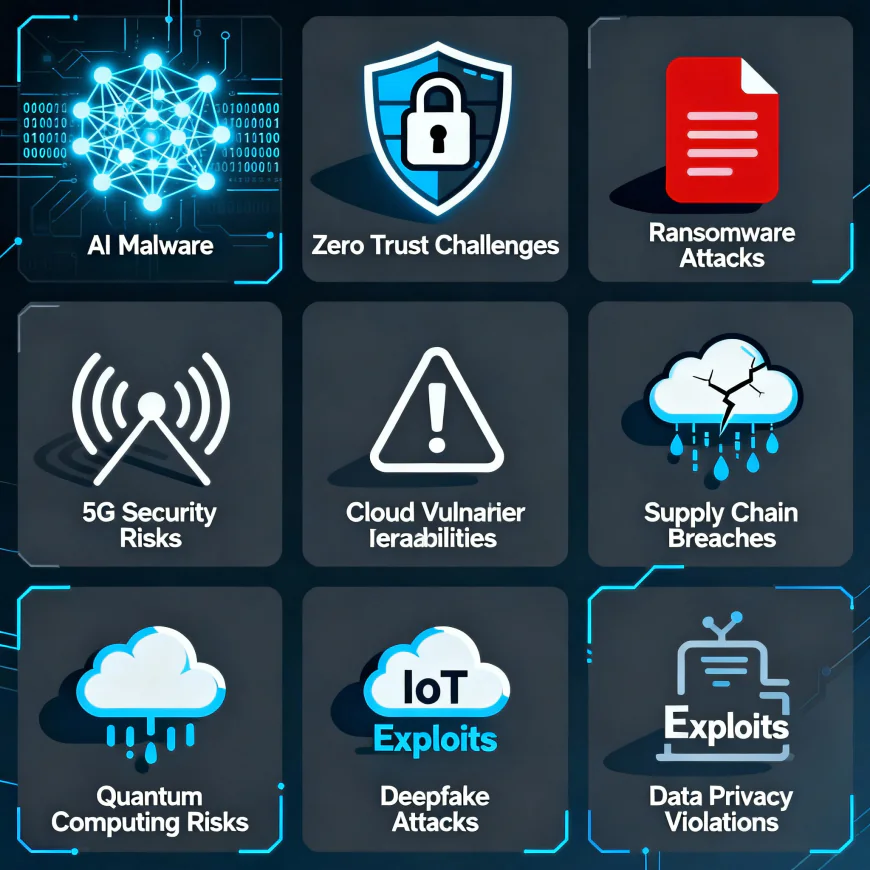
The increased interaction among various forms of technology makes it hard for IT security professionals to discern the weakest of their defenses. Nevertheless, it is essential to know the trends in 2026 in order to fortify one's defense. Below are ten trends that will have the most impact globally and should catch the organization's eye:
AI-Driven Malware
With the help of machine learning, criminals are not just developing malware that can change its appearance according to the type of detection method used, but also doing it in real-time. The malware empowered by AI can also get rid of sandboxes, discover endpoint defenses, and automate the process of infiltration further. It is very important to use anomaly analytics and behavioral AI for proactive detection of such threats .
Zero Trust Architectures
The security method based on perimeter is no longer useful in the era of cloud and mobile. Zero trust systems check every request, confirming the user's identity and the device's health all the time. Micro-segmentation, user context checks, and real-time session validation are the important factors that will make zero trust prevalent in 2026.
Quantum Computing Threats
Quantum computing can potentially be used to break already established encryption techniques although it is yet to fully rise. What is described as being intercepted data could be later stored and decrypted with quantum hardware. The domain of cryptography will still be able to secure the data when quantum technology is fully developed through the use of post-quantum cryptography and quantum-resistant algorithms .
Ransomware-as-a-Service (RaaS)
RaaS programs remove the financial constraints that come with the development of ransomware and consequently are the main cause of the current widespread ransomware attacks. The cost of data recovery is around USD 2.73 million which highlights the necessity of maintaining offline backups, implementing network segmentation, and establishing strong collaborations in the area of threat intelligence to prevent and respond to the attacks effectively .
5G and Edge Security Risks
The rapid growth of 5G technology and an increase in IoT devices will result in more spots of vulnerability in the network edge. All of these risks-disruptions, firmware attacks, and infrastructure attacks-are posed to healthcare, manufacturing, and other similar sectors.
Insider Threats in a Hybrid Work Environment
Remote and dispersed employees raise the risk of insider threats, sometimes due to unintentional mistakes in cloud sharing and sometimes due to an insider's malicious practices. The incorporation of behavior analytics along with data loss prevention is a great way to spot these threats and so lessen their impact.
Supply Chain Attacks
The trend is that the attackers are targeting more third-party vendors or software along the supply chain and then they are using these vendors to infiltrate various organizations through compromised updates. Prevention measures need to include break-down of current vendor assessments, strict and continuous compliance enforcement, and the very close monitoring of supply chain activities
Cloud Container Vulnerabilities
The use of microservices and containers can greatly enhance agility but if they are not properly configured they can also turn into a security risk. Incorporating security checks and continuous vulnerability scanning into DevOps pipelines will help in preventing the occurrence of code injection and exfiltration .
Social Engineering and Deepfakes
One of the uses of deepfake technology is to conduct scams or steal credentials by impersonation through convincing videos, voices or images. The adoption of awareness training, multi-factor authentication and verification processes are some of the key defensive strategies against these social engineering schemes .
Convergence of IT and OT Security
The merging of operational technology (OT) with IT has led to the revelation of new weaknesses within industrial control systems and manufacturing environments. Security integrated solutions, real-time monitoring and proactive patching are some of the means through which the balance between operational continuity and security is maintained .
Industry-Specific Cyber Security Insights
Every sector would come across different sets of challenges depending on data sensitivity, regulatory environment, and infrastructure complexity.
|
Industry |
Key Risks |
Strategic Focus |
|
Healthcare |
Ransomware, patient data theft |
Endpoint encryption, zero trust, secure healthcare apps |
|
Financial Services |
Fraud, data exfiltration |
Multi-factor authentication, real-time transaction analysis |
|
Retail & E-Commerce |
Card skimming, supply chain infiltration |
DevSecOps, WAF, PCI compliance |
|
Government & Public |
Credential theft, service disruption |
Zero trust, staff training, legacy system upgrades |
|
Manufacturing & IoT |
Supply chain attacks, operational disruption |
OT security software, micro-segmentation, timely patching |
Challenges in Implementing Cyber Security Trends
Adoption of new trends always comes along with quite a few hurdles to overcome such as budgets being an issue, shortage of skilled personnel, complicated multi-cloud systems, changers being slow to accept, data protection being an issue, and old systems not adapting to new technology. To get through all these, one will need to have top management support, invest in the workforce, build partnerships with outsiders, and come up with migration strategies that take place slowly.
Practical Approaches to Future-Proof Cyber Security
Organizations can turn trends into actionable defenses by:
-
Continuous monitoring of risk, and vulnerability assessments
-
Security-conscious organization culture inculcation
-
Cloud governance policies reinforcement
-
From adversaries through intelligence sharing investing
-
Incident response plan development and regular drills conduction
-
Continuous improvement and innovation adoption
In the year 2026, implementation of AI-led analytics for threat hunting, automation of patch management, adherence to secure-by-design principles, and integration of identity management 2.0 models will constitute the foundation of strong cyber defenses.
Conclusion
Staying in front of cyber security trends in 2026 is a must for the protection of data, the keeping of stakeholder trust, and the reduction of financial and operational disruptions. The advanced attack methods will require the use of zero trust frameworks, AI-based detection, cloud security, and good vulnerability management as the main ways to prevent the new attackers. A winning condition is the transformation of the whole organization to a proactive resilience with the accompanying characteristics of consistent education, smooth cooperation, and the application of creative defense strategies.
Fostering the growth of the organization through the application of the newest in cyber security, cloud security, and endpoint protection, organizations will emerge as fearless explorers of the digital universe full of complexities, and they will also create a future that can resist the digital storms.