















The Silent Intruder: How Malware Lives Among Us
Discover how stealthy malware silently invades and persists in systems, evading detection and causing long-term harm. Learn the latest techniques attackers use and how to defend against these hidden threats. Stay informed and protect your digital space today.


Introduction
The malware is not always such a noisy disruptor that will cause the screen to crash or the files to be locked, silent majority is more the case. It can even be a silent intruder that is living unnoticed in the dark corners of the systems and networks. Malicious software is nowadays in the shadows depending on stealth and usage of the same techniques as the legitimate processes to be able to live off the land. This blog post today will be about the ways malware achieves silent persistence, how it infiltrates environments, and how it controls for weeks or even years without getting noticed.
The Evolution of Stealth: What Makes Malware ‘Silent’?
- At first, the malware was very noisy, telling the world about its presence through vandalism and ransom notes. The modern threats, however, are made for silence completely blended into the background.
- Fileless malware, polymorphic code, and legitimate software abuse are just a few of the advanced methods making detection more difficult than ever.
- The goal is: to maximize data theft, espionage, or sabotage while minimizing discovery risk.
Entry Points: How Malware Slips In
- Phishing and Social Engineering: The most common starting point. A single click might directly deliver the payloads into the memory no writing to the disk.
- Exploiting Vulnerabilities: The attackers aim at the outdated software, unpatched systems, and misconfigurations for silent penetration into the network.
- Abusing Legitimate Tools: Using the Windows built-in utilities, like PowerShell and WMI, for malicious purposes makes these activities appear as regular ones.
Living Off the Land: Fileless Malware Techniques
- What is Fileless Malware? The fileless variants execute directly in memory using tools like PowerShell, regsvr32, and mshta, while classic malware, which hides in the form of downloaded files, will not be able to get those files very soon. They hardly ever set off the standard anti-virus alarms.
- Persistence Without Files: Using Registry run keys, invisible Scheduled Tasks, and WMI events attackers have long-term survival.
- Example: Cobalt Strike beacons introduced through PowerShell never engage with the hard disk, and they silently relay commands over an encrypted HTTPS connection.
Polymorphic and Metamorphic Malware: Masters of Disguise
- Polymorphic Malware: It is the one that continuously alters its code structure so that it is not caught by the signature-based detection. There can be millions of distinct decryptors for the same malware family.
- Metamorphic Malware: It is the one that completely rewrites its code, and thus, it becomes even harder to identify by the trackers or analysts.
- Impact: Antivirus software is always in a rat race with the malware and sometimes the malware is ahead in that race, thus giving the intruders a longer time on the systems.
Persistence is Key: Staying Hidden for the Long Haul
- Registry Hijacking: The malware is installed on startup registry keys, or it takes over the legitimate paths. Every reboot or user login will activate the infection.
- Scheduled Tasks and Services: TrickBot, the Trojan spyware, creates hidden scheduled tasks to make sure that the malicious programs will always be relaunching.
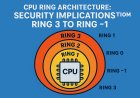
- Rootkits: Some very sophisticated intruders first change the system drivers or kernels in such a way that they become able to survive reboots and they are also able to avoid deep scans.
Lateral Movement: The Silent Spread
- The haughty ones, once inside a network, won't be satisfied with just one foothold but rather they will make use of the whole network, take over and map it out.
- Credential Dumping: Mimikatz is one of the programs that can get the passwords directly from the working memory; so, the attackers will just log into another machine silently as if they were the legitimate users.
- Living Off Legit Software: Ransomware groups are using already trusted tools e.g. AnyDesk, PuTTY, or even monitoring apps to move around internally, thus, not only to be unnoticed but also to be involved in daily administrative activities.
- Covert C2 Channels: Malicious traffic is sent through Google Sheets or SharePoint, thus, being hidden in the middle of normal workflow data.
Real-World Case Studies
- StilachiRAT: Suspicious software that steals passwords and crypto by getting past the detections, making the presence hard to spot, and lateral movement across networks.
- Fog Ransomware: The financial institution compromised data through a two-prong attack wherein it was using the open-source penetration software for both data theft and network tunnel establishment.
- Kovter Intrusion: Stay in the registry files, can be survived by deleting files, and pulling PowerShell scripts for going on with the silently over act of the whole thing.
How Silent Intruders Impact Organizations and Individuals
- Long-Term Espionage: Hibernate malware can last for months, during which it is either monitoring users or exfiltrating data with very little sign of compromise.
- Business Risks: The corporate victims of the silent intruders will encounter lawsuits from regulators, along with loss of goodwill and disruption of their operations when the intrusion is finally uncovered.
- Personal Privacy: Users may lose their sensitive data, fall victim to identity theft or the bank may take their money, all without the users noticing any unusual behavior of the system.

Advanced Defense and Mitigation Strategies
- Behavior-Based Detection: Detection will not depend solely on signatures but will monitor memory and endpoints as well as detect abnormal usage patterns.
- Regular System and Registry Auditing: The regular practice of reviewing startup processes, scheduled tasks, and registry entries helps to spot suspicious changes at an early stage.
- Least Privilege Principle: This measure refers to providing account users with the least permissions possible in order to limit the opportunities for attackers to move laterally and thus contain the extent of their compromise.
- Multi-layered Security Measures: The combination of antivirus, EDR/XDR, firewalls, and network segmentation raises the barriers for silent intruders.
- Continuous Security Awareness Training: Users are to be trained so that they are able to detect phishing attempts and report any anomalies immediately.
Conclusion: A Code War in Shadow
The war with silent intruders is being fought mainly behind the scenes. The malware is to get rid of its visibility features and still be effective against the defense. Therefore, the defense has to rely not only on the new tools but also on a good understanding of the enemy. By giving priority to behavioral analysis, maintaining rigorous system hygiene, and making ongoing vigilance, the digital ghosts amongst us would have a much harder time getting through the defenses of individuals and organizations.